Four-dimensional scanning transmission electron microscopy (4D STEM) has been generating scientific excitement for years, and for good reason: a single scan can reveal structural, chemical, strain, and electromagnetic information that previously required multiple separate experiments. What kept it out of most labs was not the science but the infrastructure. Acquisition speeds, data volumes, and workflow complexity made routine adoption impractical for all but the most specialist facilities.

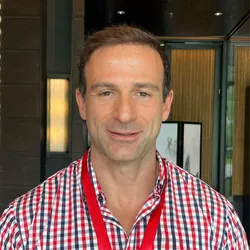
Paolo Longo, Director of Product Management, Materials and Structural Analysis at Thermo Fisher Scientific
PAOLO LONGO
That calculation is changing. A maturing detector ecosystem, faster computing, and tighter software integration have steadily lowered the barrier between a research technique and a routine characterization capability. For lab directors and facility managers evaluating 4D STEM as a capital investment, the question is no longer whether the technology works. It is whether their lab is ready for it, and what it will cost to get there.
Paolo Longo is Director of Product Management, Materials and Structural Analysis, at Thermo Fisher Scientific, and has been closely involved in bringing the EMPAD G2 to market. His vantage point is not the bench but the market: the facility managers, R&D directors, and budget committees deciding whether 4D STEM belongs in their lab. Lab Manager spoke with Longo about the real cost of 4D STEM adoption, how to build the internal business case, and what success looks like beyond installation day.

A lot of lab directors have known about 4D STEM for years but haven't pulled the trigger. What has sitting on the sidelines actually cost them, and what's changed that makes now the right time?
Every time you wait for a purchase, there's something you're going to give up or park. I think waiting has been a reasonable decision for many labs. Conceptually, 4D STEM has been around for a long time, but historically the acquisition has always been very slow, the datasets were large, and the workflow always required a pretty large amount of expertise.
What is different now is that the ecosystem has been maturing. Detectors are now faster, they can preserve a much wider range of signals, and computing has advanced a lot. Software integration is also improving. And now we can see applications that can solve real scientific problems, not just demonstrate what the technique can do.
For example, 4D STEM can now be routinely used to measure strain and fields. Ptychography is becoming increasingly important—particularly multi-slice electron ptychography, which allows three-dimensional characterization. With that, you can look at buried interfaces, defects, and how information changes across the thickness of a material. Materials are three-dimensional, but every image we take is two-dimensional. Multi-slice ptychography lets us see across that third dimension.
I wouldn't say labs should have bought this five years ago. It's more that the barrier between an exciting research technique and practical characterization is now getting much, much smaller. That's what makes this conversation different for a facility manager.
"Don't think only about the detector. The detector is obviously critical, but the return comes when you build the entire workflow around it." — Paolo Longo, Thermo Fisher Scientific |
When you're talking to the people who own the budget rather than the scientists running the experiments, what problem are they actually trying to fix?
We talk with a lot of scientists at conferences, or workshops and they say, "I want to do ptychography" or "I need 4D STEM." But if you talk with the person who is actually managing the facility, the problem is different.
The question becomes: how can I make this instrument more valuable to more users? Facility managers care about whether they can answer more scientific questions, whether the data the instrument generates is reliable, how difficult the workflow is, and how many experiments they can support. And a very important consideration is whether this capability will remain relevant for a long time, because this is a significant capital equipment investment, and you want to be confident you can take advantage of the technology for many years.


Lab Management Certificate
The Lab Management certificate is more than training—it’s a professional advantage.
Gain critical skills and IACET-approved CEUs that make a measurable difference.
In general, you don't want to start from the specification — the speed, the frame rate, the dynamic range. Specifications are important, but the more useful question is how you get more value from a significant investment in electron microscopy.
If a lab director is building out the full budget, what are they missing if they only price the detector? What else needs to go into that conversation?
When you make this purchase, you always want to think about the complete workflow: the microscope configuration, integration of the detector, computing and data infrastructure, software and analysis, training, and the applications you want to run — all of that is very important.
These detectors are fast, and the experiments produce a large amount of data. You need to create an infrastructure that gives you the ability to move data at very high speed.
You also need to think about the people who will develop the methods and support the users. How do you move from having one single expert running a specific experiment to having a capability that the entire facility can take advantage of? Integration is extremely important. We want to make sure acquisition and analysis are not disconnected but are tightly connected together.
Interested in chemistry and materials science?

My advice: Don't think only about the detector. The detector is obviously critical, but the return comes when you build the entire workflow around it.
How do you help someone put a number on the return? What does the value case typically look like for a lab considering this investment?
There's really no ROI number that works universally for every facility — a semiconductor R&D lab and a university core facility will measure the value of instrumentation in different ways.

The Thermo Fisher Scientific EMPAD G2 detector with retractable sensor insert extended, designed for 4D STEM acquisition and integrated with Velox software for simultaneous EDS collection.
Thermo Fisher Scientific
- One area is acquisition efficiency. If your detector saturates, or if you need multiple acquisitions at different conditions to capture both strong and weak signals, that costs microscope time and creates additional work. The EMPAD G2 is designed to capture an extremely broad range of signals in a single acquisition.
- Another area is workflow consolidation. By integrating everything in our Velox software ecosystem, 4D STEM and energy-dispersive X-ray spectroscopy (EDS) can be brought together in one acquisition and the same analysis environment. That gives access to more information and more definitive answers, because you are combining techniques.
So, I would look at ROI through microscope utilization, workflow efficiency, reproducibility, and the amount of useful scientific information produced per experiment. The metric is not how much data you can collect, it's how much useful information you can get from a microscope session.
That framing also shapes how to think about the adoption journey. The approach that tends to work is adoption through stages: start with a small number of well-defined applications where the facility can demonstrate value and build confidence, then expand toward more complex workflows. Success is not when you install the detector. Success is when the facility can use the capability and answer a scientific question in a routine manner.
Which types of labs are the strongest fit for 4D STEM right now? Where would you tell someone to hold off?
The key is to understand the real scientific demand for quantitative 4D STEM in your environment.
- Semiconductor research is a very good example of an immediate fit, because these devices are becoming more and more complex. The third dimension matters. You want to understand strain changes across the depth of a device, and buried interfaces and defects are becoming increasingly important.
- Materials research facilities are also a strong fit, because they need to answer a wide range of questions across different materials — crystallography, strain, fields, and ptychography — and need to get that information quantitatively.
- For university core facilities, the question is different: how many users can this capability actually serve? How many experiments can be run? Sometimes there's no single clear scientific use case, and the more useful starting point is identifying the questions the facility cannot answer today and whether 4D STEM closes that gap.
What I would say to any facility: technology should follow the scientific need, not the other way around.
If a director is trying to get this past a CFO or VP of R&D, what's the argument that actually lands?
You don't want to go to a CFO with a discussion about detector specifications. You want to start with capability and utilization: what scientific questions can we answer that we cannot answer today? Can we get more information from the microscope we already have? Can we reduce measurement repetition? Can we serve more projects and users?
You also want to show how this capability can solve problems now and remain relevant for many years to come.
"You don't want to go to a CFO with a discussion about detector specifications." — Paolo Longo, Thermo Fisher Scientific
For an R&D organization, there is another dimension: time to insight. If you can understand a failure at an interface, or measure strain with greater confidence, you get that information faster. That shortens the development cycle, which translates directly into cost savings, because you reach a technology milestone more quickly.
So, the argument would be: this investment expands what our facility can answer, improves the value of our microscope time, and gives scientists access to information that can accelerate decisions. That is the angle that resonates with a CFO — not the specification.
Are there upgrade cycles or developments you anticipate in the next three to five years?
What I see in the next few years is an acceleration toward three-dimensional characterization via multi-slice electron ptychography. Computing is getting faster, which means the reconstruction process — taking the data is already very fast, but processing large datasets takes time — will become significantly more manageable.
Integration is also getting tighter, which matters for ease of use. These techniques should not be open only to highly experienced users — the learning curve should not be prohibitively high to access this type of information.
The major developments I see in the next few years: faster computing, tighter integration, multi-modal analysis, and a continued push toward broader accessibility.