Key takeaways
- EPA Method 3051A is a microwave-assisted acid extraction using nitric acid, or nitric and hydrochloric acid, that measures leachable metals and isn’t intended to dissolve the whole sample.
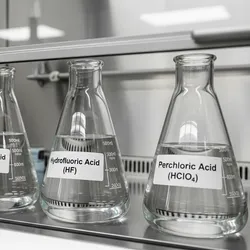
- EPA Method 3052 is a microwave-assisted total digestion using nitric acid and usually hydrofluoric acid, designed to decompose silicates and other matrices completely.
- For NIST SRM 2704 Buffalo River Sediment, chromium measured about 85 µg/g by a 3051A nitric digest and about 133 µg/g by 3052, against a certified total of 135 µg/g.
- 3051A heats to 175 °C for a 10-minute program; 3052 heats to 180 °C and holds for 9.5 minutes; both require vessels of at least 45 mL rated to at least 30 atm.
- Use 3051A where regulations call for leachable or environmentally available metals, and 3052 where total decomposition is required; 3052 isn’t appropriate where leachate preparations are specified.
EPA’s own method documents contain a neat demonstration of why method choice matters. For NIST Standard Reference Material 2704, Buffalo River Sediment, Method 3051A reports chromium recovered with a nitric acid digest at 84.7 µg/g, against a certified total of 135 µg/g. Method 3052 reports chromium in the same reference material at 132.9 µg/g. Same sediment, same element, two very different numbers, and both methods worked exactly as designed.
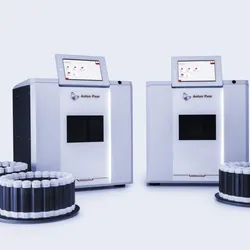
The difference between EPA 3051A and 3052 is the question each answers. Method 3051A is an acid extraction that measures leachable, environmentally available metals and leaves silicates and other refractory phases largely undissolved; Method 3052 adds hydrofluoric acid to achieve total decomposition. This article compares their chemistry, procedures, and requirements, and explains how to choose. For digestion systems generally, see our guide to microwave digestion systems.
What is the difference between EPA 3051A and 3052?
| EPA 3051A | EPA 3052 | |
|---|---|---|
Purpose | Acid extraction of leachable metals; mimics EPA 3050 and 200.2 | Total decomposition of siliceous, organic, and complex matrices |
Matrices | Sediments, sludges, soils, and oils | Ashes, biological tissues, oils, oil-contaminated soils, sediments, sludges, and soils |
Acids | 10 mL nitric acid, or 9 mL nitric plus 3 mL hydrochloric acid | 9 mL nitric acid plus usually 3 mL hydrofluoric acid; optional HCl, H2O2, water |
Sample mass | Up to 0.500 g soils and sediments; 0.250 g for oils initially | Up to 0.5 g initially; scalable to 1.0 g in 0.2 g steps; 0.25 g for oils |
Temperature profile | 175 ± 5 °C reached in about 5.5 minutes; 10-minute program | 180 ± 5 °C reached in about 5.5 minutes; held 9.5 minutes |
What remains | Quartz, silicates, TiO2, alumina may stay undissolved | Most matrices dissolve; some refractory oxides may remain |
Typical use | Regulatory leachable metals, site cleanup decisions | Total metals, mass balances, SRM analysis, geology, regulations requiring total |
All specifications are from the EPA method texts: Method 3051A, Revision 1 (February 2007), and Method 3052, Revision 0 (December 1996).
Why doesn’t 3051A measure total metals?
Because it isn’t meant to. Method 3051A states that it isn’t intended to accomplish total decomposition, so extracted concentrations may not reflect total content, and that for soils and sediments it should be considered an extraction method. It notes that refractory compounds such as quartz, silicates, titanium dioxide, and alumina may not dissolve and may sequester target elements, and that these bound elements are considered non-mobile in the environment and are excluded from most aqueous transport mechanisms of pollution.
That’s the logic behind its regulatory use: for many environmental decisions, what matters is the fraction of a metal that could move into water or biota, not metal locked inside mineral grains. The method describes its purpose as supporting decisions about materials and site cleanup levels, the need for TCLP testing, and treatment performance.
When should you use EPA 3052?
Use 3052 when you need everything. The method lists research applications such as geological studies, mass balances, and analysis of standard reference materials, along with regulations that require total decomposition. It also carries an explicit warning: it isn’t appropriate for regulatory applications that require leachate preparations, including Methods 3050, 3051, and 1311. Choosing 3052 where a leachable method is required can overstate results relative to the regulatory basis.
| Situation | Usual Method |
|---|---|
Regulatory soil or sediment screening against leachable-based limits | 3051A |
Site cleanup decisions and TCLP screening | 3051A |
Total metal content for research, geology, or mass balance | 3052 |
Certified reference material verification for total content | 3052 |
Regulation or permit specifies total decomposition | 3052 |
Oils and organic-rich samples needing larger sample sizes | 3052, which allows scale-up |


Lab Quality Management Certificate
The Lab Quality Management certificate is more than training—it’s a professional advantage.
Gain critical skills and IACET-approved CEUs that make a measurable difference.
SW-846 methods are generally guidance unless a regulation specifies them, as 3051A notes, so always check the regulatory program, permit, or project plan for the required preparation.
The hydrochloric acid option
Both methods allow hydrochloric acid to stabilize certain elements. Method 3051A notes that adding HCl improves recoveries of antimony, iron, and silver and stabilizes elements such as silver, barium, and antimony, though it can complicate some instrumental techniques. In 3052’s data for a Montana soil reference material, silver recovered 10.6 µg/g with nitric and hydrofluoric acid alone versus 36.6 µg/g with HCl added, against a certified 35.3 µg/g.
Both methods also warn that hydrochloric acid must be added as concentrated acid, not from a premixed acid solution, because premixed acids build up chlorine and other gases that can be violently released on heating. Safety practices for both methods are covered in our guide to microwave digestion safety.
Equipment and QC requirements
| Requirement | Both Methods |
|---|---|
Temperature control | Sense temperature within ±2.5 °C and adjust microwave power within 2 seconds; temperature feedback control preferred |
Temperature sensor accuracy | ±2 °C, verified periodically against a calibrated external sensor in hot silicone oil |
Vessels | At least 45 mL internal volume, rated to at least 30 atm (435 psi), with controlled pressure relief |
Seal integrity | Weigh vessels before and after; more than 1% weight loss means the sample is compromised |
Vessel cleaning | Hot 1:1 HCl then hot 1:1 nitric acid, at least two hours each, when switching between high and low concentrations |
Quality control | Method blanks, matrix spikes and duplicates, and laboratory control samples or reference materials, per method |
Method 3052 adds that only one acid mixture may be used per batch, because the system controls conditions using a representative vessel, and that boric acid or HF-resistant instrument components can address residual hydrofluoric acid in ICP analysis. Acid purity matters for both methods: reagent blanks must stay below quantitation or detection limits; see Controlling Blanks in Trace Metals Sample Prep for ICP-MS.
Practical tips
- Homogenize first. Both methods expect well-mixed samples; 3051A allows drying at 60 °C or below, crushing, sieving, and grinding, with care for volatile metals such as mercury.
- Respect mass limits for oils and organic-rich samples, and predigest reactive samples.
- Don’t mix matrices in a single QC batch; 3051A warns that dissimilar matrices shouldn’t share one set of QC samples.
- Plan HF handling before adopting 3052, including PPE, calcium gluconate, and HF-compatible labware.
- Report what you did. Note the method and acid combination with results, since they define what the number means.
- Pharmaceutical work follows its own rules; see our guide to ICH Q3D and USP <233> sample prep.
An EPA 3051A and 3052 checklist
- The regulatory basis is confirmed before choosing. Check whether the program, permit, or project plan requires leachable (3051A) or total (3052) results. Using the wrong one can bias decisions.
- The acid combination suits the analytes. Add concentrated HCl separately when antimony, silver, iron, or barium matter; add HF in 3052 only in amounts suited to the silica content.
- Sample mass respects method limits. 0.5 g for soils and sediments, 0.25 g initially for oils, with scale-up only as 3052 allows.
- Temperature control meets method requirements. Feedback control within ±2.5 °C and verified sensor accuracy are central to both methods.
- Vessels meet volume and pressure specifications. At least 45 mL and 30 atm with controlled relief; inspect outer layers for damage.
- Seal integrity is checked. Weigh vessels before and after digestion; reject samples with more than 1% loss.
- QC samples are run per batch. Blanks, spikes, duplicates, and reference materials document performance for each matrix.
- HF safety is in place for 3052. PPE, training, calcium gluconate, and HF-compatible instrument parts or fluoride complexation.
EPA 3051A and 3052 aren’t better and worse versions of the same method. They answer different questions. Know which question your data must answer, choose the method that matches, and report it alongside every result.
This article was produced under Lab Manager’s AI Editorial Guidelines