Most labs already possess the data necessary to operate reliably, but it sits in instrument log files that go largely unread until a QC failure or equipment crash forces a review. That operational gap was the focal point of a presentation by Josh Benhamou, founder and CEO of Chipper, at the 2026 AI in Lab Automation Digital Summit. Drawing on his experience building lab software at Synthego and at GRAIL, where he led the teams supporting one of the largest fully automated clinical labs in the U.S., Benhamou made the case for process models. He described these models as the solution he had long sought on the operational side: "a way to understand what your instruments are doing in real time."

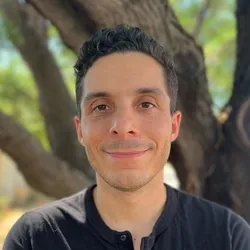
Josh Benhamou, founder and CEO of Chipper.
Why do most labs find out about instrument problems too late?
Benhamou opened with three trends he sees across the industry. Few labs monitor their instruments in real time. Unplanned equipment downtime is a persistent problem, and labs often struggle to predict the next failure or efficiently perform root-cause analysis. Lastly, many still track utilization manually, relying on spreadsheets, whiteboards, or shared calendars.

Rather than treating these as isolated issues requiring separate initiatives, Benhamou argued otherwise: "They're not three separate problems, and they definitely don't have three separate solutions." All three, he explained, trace back to the same untapped resource: not the QC data instruments produce, but the raw hardware logs that record every step an instrument executes.
What is a process model?
In Benhamou's definition, a process model is "a digital representation of how your lab operates," built automatically from existing instrument logs. "It's not from sensors that you had to install," he said, and it requires no script modifications or instrument revalidation.
The methodology operates in three distinct phases:
Ingestion: Logs from liquid handlers, workcells, walk-up instruments, and plate sealers are routed into a centralized data pipeline.
Learning: The model analyzes 90 days or more of historical runs to establish a highly customized operational baseline.
Real-time monitoring: Live operational data is continuously compared against this established baseline. Any deviations trigger targeted alerts, enabling staff to investigate, schedule maintenance, or temporarily pull an instrument offline before a failure occurs.
Just as important, "institutional memory is the core of what process models are," Benhamou said. By capturing a clear picture of normal operations, the model ensures tribal knowledge remains in the lab even amid staff turnover.
According to Benhamou, process models offer three core benefits:
More uptime: Catching drift before it becomes a failure keeps instruments running.
Faster turnaround: Pinpointing root causes as they happen shortens the time from problem to fix.
Higher overall equipment effectiveness (OEE): Fleet-level utilization data reveals where capacity, risk, and capital investment should shift.
Improving instrument uptime
In one anonymized example from a high-throughput lab, a set screw was misconfigured during scheduled maintenance on a Hamilton liquid handler, leaving the plate sitting at a slight angle. Liquid level sensing on that side began failing, and the instrument retried repeatedly before aspirating the entire well.
Nothing crashed, and runs carried on until QC flagged a cluster of failures on one side of the plate. "It's a subtle thing you don't notice, and it's kind of an insidious failure," Benhamou said.
A process model tracks the expected range of liquid level sensing events and flags drift the moment it appears, giving labs an informal check that an instrument behaves as it did before service. For clinical labs, that record can complement the maintenance and function checks already required under CLIA for nonwaived testing. Crashes and unplugged cords get caught instantly, but as Benhamou noted, "it's the insidious ones that really are quite hard to notice." For labs building predictive maintenance programs, that early warning is the difference between a quick fix and a failed batch.
Shortening turnaround time
Turnaround times suffer when problems remain hidden until post-run QC. Catching them sooner does not require a fully automated lab, Benhamou stressed; walk-up instruments, standalone systems, and manual steps can all be mapped. In one example, a sample sat on a Hamilton too long after its method finished. That timing may well be written into an SOP—though, as Benhamou quipped, "as we know, SOPs are always followed exactly as they're written."


Lab Management Certificate
The Lab Management certificate is more than training—it’s a professional advantage.
Gain critical skills and IACET-approved CEUs that make a measurable difference.
By analyzing log events such as the opening of an instrument door, a process model can measure the exact gap between a method's completion and human pickup. This visibility provides lab leaders with the data to enforce SOPs or revise them if extended dwell times are negatively impacting sample stability.
What can instrument utilization data tell lab leaders?
The third benefit is visibility. Benhamou shared a 12-week heat map of seven instruments: one Hamilton ran at 90 to 95 percent utilization, two others at roughly half that or less, and the lab's Biomek units between 20 and 50 percent.
Beyond raising questions about operator habits or method compatibility, that imbalance concentrates risk. "You're really distributing your risk poorly if you're using one instrument much more than the others," Benhamou said.
The same data informs asset management decisions: whether the lab genuinely needs another liquid handler, or whether an underused one has a scripting issue keeping operators away. Since process models are already reading the logs, Benhamou noted, "you get this kind of information for free."
Interested in lab tools and techniques?

Implementation: why now?
If the data has always been there, why hasn't every lab done this? "Previously, this was really hard to do," Benhamou acknowledged. At Synthego, his team modified instrument loggers to add sample, order, and operator context to every line, but that remains rare. In FDA-regulated labs, altering instrument code is often prohibited where computerized equipment can be subject to cGMP controls.
"AI is really changing the landscape here," he said. Labs can now use AI to correlate raw logs with LIMS or sample-tracking data after the fact, without touching instrument software. Benhamou noted that larger players, including Eli Lilly, have begun publicly discussing similar "process twin" concepts.
Benhamou did not undersell the effort. "If it was easy, you could ask Claude to go build it for you," he said. "It is not easy." He outlined four key components to building a functional process model:
Instrument logs: Raw device output, which varies widely. A Hamilton may log a couple hundred lines per script; a Tecan can produce roughly 20,000 lines in a few minutes, by Benhamou's estimate.
Historical data: Typically 90 days or more to establish an accurate baseline.
Machine learning engineers: Specialists in time-series analysis and anomaly detection.
Instrument expertise: Automation engineers or service technicians who can interpret signals matter and can feed corrections back into the model.
While most labs already possess the instrument logs, acquiring the specialized machine learning and automation talent to analyze them remains the primary hurdle.
Results can come quickly. In one anonymized deployment, instruments were connected on day zero, and by day two the model had flagged aspiration drift on a liquid handler that would otherwise have gone unnoticed until QC pass rates fell. The rest of the week went to tuning: models "should cast a wide net first," Benhamou explained, then staff mark which alerts matter so the model sharpens without burying people in noise.
Integration and Compliance
During the presentation, Benhamou clarified how process models fit into a broader laboratory data ecosystem. A LIMS remains the definitive system of record for what the lab has done. The process model acts as a complementary monitoring layer, informing what the lab should do next, from maintenance timing to capital spending.
On validation, he acknowledged that quality teams will differ, but most quality teams Chipper has spoken with treat process models as read-only monitoring tools outside GxP validation. "They're not changing anything about your assay," he said. Labs operating under 21 CFR Part 11 should still confirm that position with their quality unit. FDA's risk-based computer software assurance guidance offers a useful framework for matching validation effort to a tool's actual risk.
Benhamou's responses during the Q&A point to several practical considerations for lab leaders evaluating a process model:
Fit with existing systems: Process models sit alongside the LIMS as a monitoring layer and can replace general-purpose visualization tools such as Tableau.
Validation: Because they are read-only, most quality teams Chipper has spoken with treat them as monitoring tools rather than GxP-validated systems.
Ownership: Internal builds usually sit with data science teams, while purchased platforms are typically driven by operations.
Data readiness: Log formats vary widely (eg. Tecan's XML, Hamilton's TRC files, Agilent Bravo's VWorks output) but about 90 days of history is generally sufficient to begin modeling.
Best candidates: Instruments worth roughly $50,000 or more that require preventive maintenance deliver the most value; simple walk-up instruments like plate sealers deliver less.
Institutional memory that stays in the lab
Benhamou closed by returning to his central point. Most labs leave their instrument logs untouched on local computers, yet every lab has someone who senses when an instrument is not operating at optimum functionality. A process model aims to capture that intuition and keep it running around the clock.
"It's not the alerts. It's not the dashboards," he said. The real value, he argued, is the "hard-won knowledge about how your lab actually operates."
Lab leaders can begin capitalizing on this technology today by taking inventory of what their high-value instruments are already recording and evaluating whether to build or buy their way to a more resilient, data-driven laboratory. As labs prepare for the next stage of AI and automation, the data needed to get there may already be in hand.