Key takeaways
- The main hazards of a rotary evaporator are glassware implosion under vacuum, overpressure explosions, bumping and foaming, solvent vapor exposure, concentrating unstable residues such as peroxides, cold trap hazards, burns, and pinch points.
- Inspect every flask for star cracks and scratches, use coated or taped glassware, and work behind a fume hood sash or shield.
- Fasten flasks and bump traps with clips, apply vacuum and rotation gradually, and use a clean bump trap.
- Vent vacuum exhaust to a fume hood, empty solvent traps before use, and never concentrate ether solutions that may contain peroxides to dryness.
- With liquid nitrogen cold traps, keep the system under vacuum before, during, and after cooling to avoid condensing liquid oxygen.
On March 2, 2021, a student at Texas Tech University was using a rotary evaporator to remove methanol from a product. As the university’s lessons-learned report describes, the student secured the flask, started the run, closed the fume hood sash, and walked to an adjacent aisle, then heard a loud pop. The flask had overpressurized and exploded, damaging the inside of the sash, which contained the glass and chemicals. No one was injured. The cause surprised everyone: the lab’s brand-new rotovap had a faulty water bath, and repair found its actual temperature differed from the setpoint by as much as 40 degrees. The setup and calculations had been done correctly.
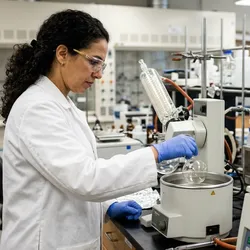
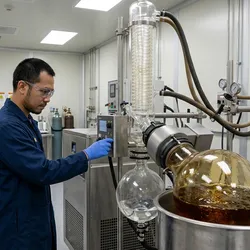
What are the hazards of using a rotary evaporator? Glassware can implode under vacuum or explode under pressure; samples can bump and foam; solvent vapors can escape; unstable residues such as peroxides can concentrate; and cold traps, hot baths, and moving parts add their own risks. Rotovap safety comes down to a handful of habits: inspect the glass, shield it, clamp it, apply vacuum gradually, vent vapors properly, and know what you’re concentrating. For how rotovaps compare with other evaporators, see our guide to lab evaporators.
What are the hazards of using a rotary evaporator?
- Implosion of glassware under vacuum, especially flawed or oversized flasks.
- Explosion or overpressure from blocked vents, reactive materials, or unstable residues.
- Bumping and foaming that throw sample into the bump trap or condenser.
- Solvent vapor exposure from vacuum exhaust, leaks, or open traps.
- Peroxides and unstable impurities concentrating as solvent is removed.
- Cold trap hazards, including condensed liquid oxygen with liquid nitrogen traps.
- Burns, cuts, and pinch points from the hot bath, broken glass, and the motor and lift.
Lists like this appear in most university SOPs; one fume control overview groups them as pinch points, implosion and explosion, fume inhalation, bath burns, and cuts from broken glass.
Preventing implosion
Every vessel under vacuum carries the full weight of the atmosphere on its walls. Penn’s SOP for glassware under vacuum says any container under vacuum must be regarded as an implosion hazard, and that rotovaps not inside a fume hood or similar enclosure must have glass that’s plastic-coated or wrapped in friction tape or netting.
- Inspect every time. Don’t use glassware with star cracks, scratches, or etching; the Texas Tech report notes it only takes a tiny crack to compromise glassware under vacuum.
- Size flasks sensibly. Illinois’ vacuum safety guidance advises avoiding round-bottom flasks over 1,000 mL unless the glassware is approved for vacuum work.
- Coat or wrap larger glass. The same guidance calls for wrapping or coating glassware of 250 mL or more under vacuum, including receivers and bump traps.
- Shield the operator. Work behind the fume hood sash or a portable shield, and wear goggles; see our guide to eye and face protection.
- Clamp everything. Penn’s SOP calls for securely clamping the sample flask, receiving flask, and traps.
Preventing bumping and foaming
- Use a clean bump trap of the right size, fastened with a clip. Illinois’ rotovap SOP requires the bump trap and flask to be secured with metal or Keck clips.
- Apply vacuum and rotation gradually. Penn’s SOP says to increase rotation speed and vacuum gradually; one university lessons-learned summary adds that pulling a small vacuum before starting rotation helps keep the flask from slipping off.
- Don’t overfill the flask; leave plenty of headspace for foaming.
- Lower the bath temperature or raise the pressure if the sample starts to bump.
- Use a vacuum controller that ramps pressure down rather than pulling full vacuum at once.
Avoiding explosions and unstable residues
Rotovaps concentrate whatever is in the flask, including things you don’t want concentrated. A general reference on rotary evaporators notes that explosions can occur from concentrating unstable impurities, such as rotavapping an ether solution that contains peroxides.
- Test ethers for peroxides before concentrating, and never evaporate them to dryness; see our guide to peroxide formers and chemical shelf life.
- Keep reactive and energetic materials out of the rotovap unless a specific procedure allows them.
- Verify the bath temperature with an independent thermometer, especially on new or repaired equipment; the Texas Tech bath ran up to 40 degrees off its setpoint.
- Don’t walk away from a new setup. Stay with unfamiliar samples or equipment until behavior is known.
Lesson: a peroxide explosion at the bench
UC Berkeley’s lessons-learned archive records a 2006 incident titled “Peroxide Explosion Injures Campus Researcher.” An undergraduate was using a rotovap to remove organic solvents from an azobenzene precipitate when the apparatus exploded, sending glass into her face and upper torso. A lessons-learned compilation that reproduces the case adds that her safety goggles took much of the impact, though she still needed stitches above her eyes. Peroxides concentrating as solvent is removed, glassware with hidden defects, and work outside a shield are the recurring threads in incidents like this.
Controlling solvent exposure
- Vent vacuum pump exhaust into a fume hood or exhaust system.
- Keep the condenser cold enough to capture your solvent; condenser and chiller sizing are covered in our guide to recirculating chillers.
- Empty traps and receiving flasks before use. Mixing a new solvent with the previous user’s waste can create incompatible mixtures, as UCLA guidance cited in the fume control overview notes.
- Dispose of collected solvent as hazardous waste, labeled with its contents.
Cold traps, baths, and moving parts
- Liquid nitrogen traps: Illinois’ vacuum guidance warns that the system must be under vacuum before, during, and after cooling with liquid nitrogen; otherwise liquid oxygen can condense in the trap and cause an explosion.
- Dry ice traps: handle with insulated gloves and keep traps topped up; a UNC group SOP includes checking the cold finger before each run.
- Hot baths: keep bath levels adequate and handle hot flasks with care; Illinois’ rotovap SOP notes not to fill the bath with pure deionized water because it corrodes stainless steel, the same advice we give for lab water baths.
- Moving parts: keep hair, sleeves, and tubing clear of the rotating motor and lift.
- PPE: goggles, a lab coat, and suitable gloves as a baseline; see our guide to lab PPE programs.
A rotovap safety checklist
- Glassware is inspected before every run. Look for star cracks, scratches, and etching against the light; discard anything doubtful.
- Glass is coated, wrapped, or shielded. Use coated glassware or tape on larger vessels, and work behind a sash or shield.
- Flasks and bump traps are clipped. Clean bump traps, correctly sized, held with metal or Keck clips.
- Vacuum and rotation are applied gradually. Ramp vacuum with a controller and increase rotation slowly to prevent bumping.
- Samples are screened before concentration. Test ethers for peroxides, never evaporate them to dryness, and keep reactive materials out.
- Vapors go somewhere safe. Vent pump exhaust to a hood, keep the condenser cold enough, and empty traps before use.
- Cold traps are used correctly. Keep liquid nitrogen traps under vacuum throughout to avoid liquid oxygen.
- An SOP is posted and followed, especially after equipment changes. Write it with manufacturer guidance, train everyone, and post it at the rotovap.
Most rotovap incidents start with something ordinary: a flask with a crack nobody saw, a new instrument used the old way, or an ether nobody tested. Inspect, shield, clamp, ramp slowly, and know what’s in the flask, and the instrument stays as routine as it looks.
This article was produced under Lab Manager’s AI Editorial Guidelines