Greiner Bio-One has introduced the SCREENSTAR Spheroid Plate, a 96-well spheroid microplate that forms uniform spheroids via gravity and images them directly in the same plate. Conical wells and an ultra-thin cycloolefin polymer (COP) film bottom work together to eliminate the transfer step that separates culture from analysis in conventional workflows. Lab managers evaluating the plate will want to confirm whether the claimed tenfold scanning-time reduction holds across their specific cell types and assay formats during sample testing.
Editor's Note: Commercial spheroid microplates now span a range of geometries, surface chemistries, and optical formats. Performance benchmarks in this category rarely keep pace with new releases, so direct comparisons require in-house validation. The SCREENSTAR Spheroid Plate targets two persistent pain points for labs scaling 3D workflows: consumable redundancy and per-run scan time. Labs running a two-plate formation-and-imaging workflow, or spending significant instrument time on whole-well scanning, face a concrete cost-of-time decision here.

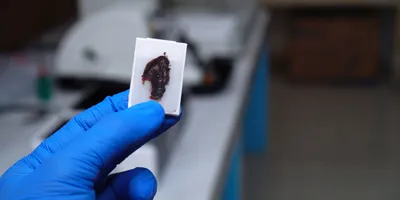
Spheroid transfer: the hidden cost in 3D cell culture workflows

The 96-well SCREENSTAR Spheroid Plate by Greiner Bio-One consolidates 3D cell culture formation and high-content imaging into a single-plate workflow.
Greiner Bio-One
Transferring spheroids between plates is the most disruption-prone step in the standard 3D cell culture workflow, and for labs working with primary cells or patient-derived materials, a failed transfer means repeating expensive, finite starting material. Researchers form spheroids in a low-attachment plate, move them manually to a separate imaging plate, and absorb the resulting mechanical stress, operator variability, and timeline extension. Each of these costs compounds as labs move deeper into 3D workflows.
The SCREENSTAR Spheroid Plate collapses formation and direct analysis into a single plate, removing the transfer step entirely. By integrating specialized well geometries, high-clarity materials, and automation-friendly dimensions, the SCREENSTAR Spheroid Plate accelerates the entire 3D cell culture workflow from initial formation to high-content analysis.
| Design feature | Workflow stage | Lab impact |
|---|---|---|
| Conical well geometry | Spheroid formation | Gravity-induced aggregation into one spheroid per well; no external force or reagent required |
| Ultra-low attachment, cell-repellent surface | Formation and long-term culture | Prevents monolayer growth; maintains spheroid morphology over extended incubation |
| 190 µm ± 20 µm COP film bottom | Microscopic and reader-based analysis | Glass-like imaging quality with air, oil, and water immersion objectives |
| Black sidewalls | Fluorescence and luminescence detection | Minimizes well-to-well crosstalk and background signal in multiplexed assays |
| Size-optimized imaging window | High-content imaging scan runs | Reduces scanning time by up to tenfold vs. a standard 96-well microplate |
| SBS footprint, ANSI standard dimensions | Liquid handling and automation | Compatible with automated dispensers, multichannel pipettes, and robotic platforms |
| Sterile, 8 plates per bag (Item 655966) | Procurement | Single SKU covers formation through imaging; standard sterile packaging |
Does the SCREENSTAR Spheroid Plate fit your current automation stack?
Three specifications determine whether this plate slots into an existing 3D screening workflow without additional validation work. The Society for Biomolecular Screening (SBS) footprint and American National Standards Institute (ANSI) standard dimensions mean it fits existing liquid handling decks without specialized adapters. Labs running primary cells alongside 3D models can seed the plate exactly as they would a standard 96-well format.
Adoption decisions for labs considering this spheroid microplate typically hinge on three operational factors:
- Screening throughput: Labs sharing a high-content imager across multiple projects gain the most from a tenfold reduction in per-plate scan time, directly increasing experiments per instrument-day.
- Automation compatibility: Multichannel pipettes and automated dispensers require no modification; the product instructions recommend gentle side-well medium addition to avoid disturbing settled spheroids.
- Reagent savings: Reagent-free formation removes both the reagent cost and the burden of validating that scaffold materials do not interfere with assay readouts.
The FDA's April 2025 move toward non-animal preclinical testing has raised industry pressure to standardize spheroid-based screening in automation-compatible, well-characterized formats. Pharma and biotech labs expanding 3D cell model programs as part of preclinical pipelines under the FDA Modernization Act 2.0 now have a regulatory incentive to tighten workflow consistency. For labs scaling spheroid assays, incubator stability and culture reproducibility remain foundational concerns to address early.
Single-plate spheroid microplates consolidate 3D screening from formation to imaging
Combining spheroid formation and high-content imaging in one plate cuts both material handling risk and consumable cost compared with two-plate workflows, making single-plate formats a practical choice for labs building reproducible 3D screening pipelines. The SCREENSTAR Spheroid Plate's reagent-free, gravity-based formation and COP film bottom rated for immersion objectives suit assay development, phenotypic screening, and high-content analysis where sample integrity and optical access are both critical. With FDA guidance formalizing standards for non-animal preclinical testing, single-plate spheroid microplate formats are positioned to become the operational baseline for labs running 3D workflows at scale.
This content includes text that has been generated with the assistance of AI. For more information, view Lab Manager's AI use policy.