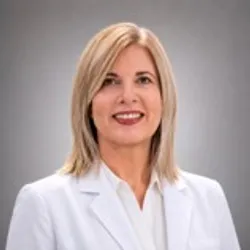
When I opened my first clinical lab in Chihuahua, Mexico, in 2004, I could oversee the work myself. Expanding to a second location meant deciding which responsibilities other people would take on and how I would stay informed.
The procedures I documented in our first few months gave us a starting point. One covered the verification, documentation, and notification of critical results. Staff had a process to follow whether or not I was in the building. As we expanded, we needed to define who would oversee that follow-up at each location.
Today, Clínica Imatek operates four locations with a staff of 40. We reached that size in stages, stabilizing each expansion before moving to the next. Along the way, responsibilities I had managed myself became defined roles, training became a planned investment, and communication required more structure. Those changes form the less visible work of opening another lab.
Assigning responsibility at each location
At one location, I followed up on every critical result myself. Adding a second meant that couldn't continue, so I put a manager in place at each new site to run that same procedure and logbook at the same standard.


Every result now passes two reviews before it is released. The first happens in the process area, the technical team that runs the tests in hematology, clinical chemistry, and coagulation. The chemist who performs a test confirms that the day's internal quality controls passed, that the equipment check for that shift was completed, and that any value far outside the reference range was verified again before it is accepted. The second review belongs to the branch manager, who checks every result their location delivers against the patient's request and the information collected before the sample was taken, such as fasting status or current medications, looking for anything that doesn't fit. The process area asks whether the measurement is right. The branch manager asks whether the result makes sense for this patient. Underneath both sits a rule that never changed: by regulation, every chemist signs their own results, so every result still traces back to one identifiable person.
Each branch manager also sends me a brief written report at the end of the day. It lists any critical results, who was notified and when, samples that had to be recollected, and any equipment or supply problems. I read it for patterns across locations. If one site is recollecting more samples than the others, that usually points to a training need rather than an individual mistake. The manuals themselves get updated every year, with a deeper restructuring roughly every three years as the business became more organized.
If you're opening a second location, put one person in charge of critical-result follow-up at that site from the start and have them report to you in writing. A daily report worked for us, but the schedule matters less than the content. A weekly summary can work too, as long as critical results reach you the same day.
Making training part of the budget
At one location, training was informal. I knew what my team needed because I worked next to them. As we expanded, I could no longer rely on working alongside staff to identify training needs. Now we build a training plan at the start of each year that covers several technical areas, and staff attend courses at recognized institutions in Mexico throughout the year, paid for by the lab. It's non-negotiable because the alternative is quality that depends on who's on shift rather than a shared standard everyone was truly trained to.


Lab Quality Management Certificate
The Lab Quality Management certificate is more than training—it’s a professional advantage.
Gain critical skills and IACET-approved CEUs that make a measurable difference.
The bottleneck that forced communication into a system
Early on, coordination between branches and departments happened the way it does in any small operation: a direct message or call between whoever needed the answer and whoever had it. That worked while the team was small enough to hold in your head but stopped working the moment client volume outgrew it.
The fix was to organize communication by task rather than by person. Each process now has its own WhatsApp group, used only for day-to-day logistics and scheduling. Patient-identifying information never goes there. It stays in our formal records and email. Short daily calls handle issues that need an answer the same day. A weekly Zoom meeting covers what can wait, such as planning and recurring problems. Email is reserved for anything that needs a record, like authorizations, formal notifications, and sign-offs.
Sample transfers show the difference. Some tests are run at only one of our locations, so samples move between sites every day. Before scaling, a branch would message whichever chemist it knew, and if that person was busy or off shift, a sample could wait hours before anyone confirmed it had arrived. Now the sending branch posts each transfer in that process's group, the receiving team confirms it there, and anything still unconfirmed comes up on the daily call. Delays we used to discover only when a physician called asking for a result now get caught the same day.
Interested in lab leadership?

Why ISO 9001 mattered
In my experience, what ISO asks for first is training, since a process can't really be certified until people have been trained to follow it consistently. What it gave us after that was a management model built for catching errors early rather than after the fact.
The practice that changed the most was how we handle nonconformities. Before certification, when something went wrong, such as a mislabeled tube or a result released late, we fixed it and moved on. ISO required us to record each one, find the root cause, and check later that the corrective action had worked. Once those records sat side by side, we could see patterns no single incident revealed. In one case, several hemolyzed samples from the same branch traced back to how tubes were being stored before transport during the busiest morning hours. We changed the procedure, retrained staff at that site, and the recollections there dropped. For a lab past the point where one person could verify everything, that's the difference between quality control that depends on an individual and quality control that depends on a system.
What I'd tell a lab director opening a second location
Don't scale the number of sites faster than you can scale the roles that used to be informal. Know who owns critical-result follow-up before you stop reviewing every report yourself. Build the sign-off and dual-review structure before you need it, not after an error shows you the gap. And treat training as infrastructure.