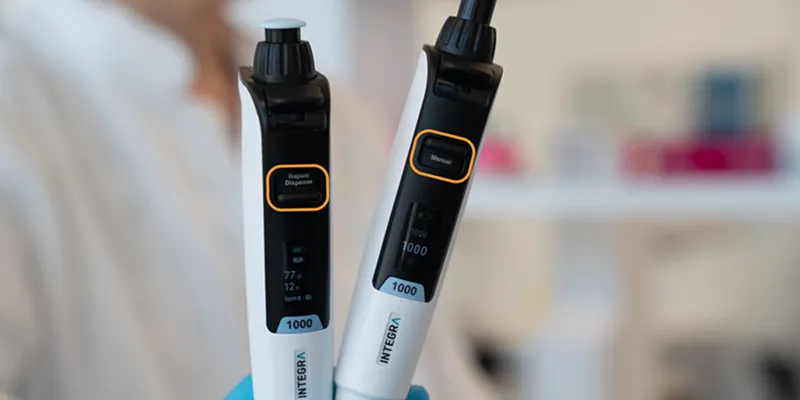
Anthropic has opened a biology lab in the San Francisco Bay Area, bringing some of its life sciences work out of computer simulations and into physical experiments. The company confirmed the lab to Reuters. One person familiar with its plans told the news agency that Anthropic wants to explore how its Claude AI system could direct robotic units to carry out experiments with limited human intervention.
Reuters did not report that Claude is already directing experiments in the lab, and Anthropic has not disclosed how it approves or monitors the work conducted there. A company spokesperson told Reuters that human oversight and involvement are essential for safety. “We’re in the very early innings of using AI to automate the execution of lab work,” Eric Kauderer-Abrams, Anthropic’s head of life sciences, told Reuters.
The development brings a familiar lab management responsibility into sharper focus. Labs already assess hazards before beginning biological work and revisit those assessments as the work changes. But if software can propose an experiment and direct equipment to run it, managers need to know in advance which decisions a person has approved and which ones require a fresh review.
Start with the scope of the work
The Centers for Disease Control and Prevention advises labs to conduct formal biological risk assessments before work begins and repeat them when practices, personnel, instrumentation, or facilities change. The assessment should draw on people who understand the activity and the site, including scientists, safety professionals, and others with relevant expertise.
Applying that approach to an AI-directed workflow means looking beyond the first experiment in a series. A manager would need to establish what the system may ask the equipment to do: select from approved procedures, adjust settings within set limits, or propose a new procedure based on a previous result. Each gives the software a different degree of control over the physical work.
A lab might approve a defined range of routine adjustments as part of its initial assessment. If the system proposes a step outside that range, the workflow could pause for review. The relevant boundary depends on the materials, equipment, procedures, and potential consequences of an error. It should also be clear to the people operating the system; a general promise of “human oversight” does not specify when a person must make a decision.


Lab Safety Management Certificate
The Lab Safety Management certificate is more than training—it’s a professional advantage.
Gain critical skills and IACET-approved CEUs that make a measurable difference.
Recognize when the assessment no longer fits
New equipment and procedures can change the risks of an established activity, even when the research goal stays the same. The World Health Organization’s Laboratory Biosafety Manual identifies changes to procedures, equipment, and technology as reasons to reassess risk. CDC likewise calls for a new formal assessment when changes are introduced into an activity. Neither organization provides a specific sign-off model for AI-directed robots, but their guidance offers a way to decide when the approved scope of work needs another look.
Biosafety professional Julianne L. Baron, PhD, makes a similar point in a Lab Manager article on routine changes that require biosafety review. She advises managers to consider whether a change affects the biological materials, procedure, equipment or controls, space, or people involved. When it does, or when its effect is unclear, managers should involve the appropriate biosafety professionals before making the change part of routine work.
For automated experiments, the team could use those same considerations to identify when a run must pause. If software proposes a different material, procedure, or equipment configuration, the question is whether the existing assessment covers that action. If it does not, the appropriate people need an opportunity to review it before the equipment acts.
Interested in lab health and safety?
Make sign-off visible
Oversight also depends on knowing what happened during a run. If an AI system proposes an action, a scientist changes it, and a robot performs it, the record should distinguish each step. That gives staff a way to reconstruct a deviation and determine whether the equipment followed an approved procedure.
Managers also need to assign authority before a run begins. Who monitors the system? What causes it to pause? Who investigates an unexpected action, and who approves a restart? The answers may involve the scientist leading the work, an automation specialist, a lab manager, and biosafety personnel. Whatever the arrangement, staff need to know who can stop an experiment when it moves beyond its approved scope.
Anthropic has not disclosed enough about its lab for outsiders to assess its oversight practices. Its interest in AI-directed robotic work nevertheless raises a concrete question for laboratories considering similar systems: Can the team identify the point where an AI proposal becomes an authorized physical action? If that point is unclear, managers have more work to do before expanding the system’s role.
This article was created with the assistance of Generative AI and has undergone editorial review before publishing.