Electrophoresis is a fundamental technique for separating proteins and nucleic acids, making it a daily routine in many life science laboratories. Because the procedure is so common, it is easy to become complacent. However, electrophoresis apparatus combines high voltage, accessible liquid tanks, and toxic chemicals into a single workflow. Managing electrophoresis hazards requires strict adherence to established safety practices, a clear understanding of the equipment’s limitations, and following general lab safety rules.
Key takeaways
- Turn it off first. The single most important requirement in the standard is to turn it off. The most likely source of a serious electrical injury in a life science laboratory is an electrophoresis power supply.
- Electrophoresis units combine high voltage, an accessible tank, and a well-documented accident pattern. Never open a tank lid without switching off and disconnecting the leads.
- The one-hand rule is genuine electrical folklore with a real rationale behind it, and it is still the wrong thing for us to be publishing in 2026. NFPA 70E has required since its 2004 edition that an electrically safe work condition be established.
- Unplugging is not lockout. 29 CFR 1910.333(b)(1) requires that equipment deenergized but not properly locked or tagged out must be treated as energized.
- Chemical and thermal hazards require distinct controls. Ethidium bromide is a potent mutagen, and microwaving agarose frequently causes superheating and severe burns.
The Electrical Hazard and NFPA 70E
In a life science laboratory, the electrophoresis power supply is arguably the most hazardous item on the bench. Output commonly ranges in the hundreds to low thousands of volts, with an accessible tank and buffer. The classic accident involves contact with the buffer or an electrode while the supply is live, and DC at these voltages across the torso is readily fatal.
The fundamental rule is to completely de-energize the system before interaction. Never open a tank lid without switching off and disconnecting the leads. Confirm the lid interlock works rather than assuming it does. Inspect leads and jacks for cracks. A safe practice is one person, one supply, one tank, and do not run multiple tanks off one supply.
Some legacy guides recommend the "one-hand rule"—keeping one hand in a pocket while connecting leads. This is genuine electrical folklore with a real rationale behind it, and it is still the wrong thing for us to be publishing in 2026. It is not a control and it does not appear in the standard as a substitute for de-energizing. NFPA 70E has required since its 2004 edition that an electrically safe work condition be established. The single most important requirement in the standard is to turn it off.
Lockout/Tagout for Power Supplies
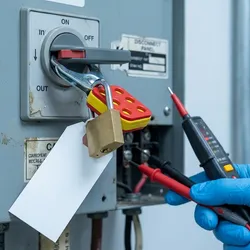
If a power supply requires maintenance, unplugging is not lockout. 29 CFR 1910.333(b)(1) provides that equipment deenergized but not properly locked or tagged out must be treated as energized. Furthermore, stored energy is the part people forget. Capacitors in electrophoresis units can retain a lethal charge after power-off and after the indicator lights go out. Service requiring panel removal must be handled by the manufacturer or a qualified person. Ensure your lab enforces appropriate footwear to manage static and electrical isolation risks.
Chemical Risks: Stains and Matrices
Electrophoresis requires matrices and visualization chemicals that present significant health risks. Ethidium bromide, a common nucleic acid stain, is a potent mutagen and irritant. It must be handled with nitrile gloves; latex provides insufficient protection. Designate a specific bench area for ethidium bromide work to contain potential contamination. Polyacrylamide gel electrophoresis (PAGE) introduces acrylamide, a neurotoxin and suspected carcinogen in its unpolymerized form. Weighing acrylamide powder should always be done inside a chemical fume hood.
Thermal Hazards: Melting Agarose
A frequent laboratory injury involves melting agarose in a microwave. Agarose solutions can become superheated—reaching temperatures above their boiling point without actually boiling. When the flask is moved, the physical disturbance can cause the liquid to erupt, leading to severe thermal burns on the hands and face. Always use a container significantly larger than the volume of liquid being heated. Loosen the cap to prevent pressure buildup. Wear insulated, heat-resistant gloves and a face shield when removing the flask, and point the opening away from your body. Familiarize yourself with how to handle medical emergencies in the laboratory should thermal burns occur.
Ultraviolet Light Exposure
Visualizing DNA bands often requires placing the gel on a UV transilluminator. UV radiation can cause severe burns to the skin and cornea (photokeratitis) with only brief exposure. Standard polycarbonate safety glasses do not provide sufficient coverage for the face and neck. When operating a transilluminator with the shield open, workers must wear a fully rated UV face shield, long sleeves or a lab coat, and proper gloves. Refer to our PPE selection guide to properly match your face shields and gloves to these specific hazards.
Electrophoresis Hazards and Controls Summary
Hazard Type | Specific Risk | Required Control |
Electrical | High voltage (hundreds to thousands of volts) with accessible buffer tanks. | Turn off power and disconnect leads before opening lid. Confirm interlocks function. |
Stored Energy | Capacitors retaining lethal charge after power-off. | Treat as energized until properly locked/tagged out by a qualified person. |
Chemical | Ethidium bromide (mutagen) and unpolymerized acrylamide (neurotoxin). | Use nitrile gloves, designate specific work areas, and weigh powders in fume hoods. |
Thermal | Superheated agarose erupting from microwave containers. | Use oversized containers, loosen caps, wear heat-resistant gloves and face shield. |
Ultraviolet (UV) | Severe burns to skin and cornea from transilluminators. | Wear a fully UV-rated face shield (not just safety glasses) and ensure all skin is covered. |
Resources and Further Reading
This article was produced under Lab Manager’s AI Editorial Guidelines