While many research facilities struggle with the high overhead of single-use plastics and chemical disposal, the Department of Chemical Engineering at the University of Waterloo is proving that sustainability is a core technical skill. By earning the Green Lab Gold Certification for the second year in a row, the department has integrated award-winning greener lab practices that prove top-class education doesn't have to come at the planet's expense. For lab managers, these initiatives provide a scalable blueprint for reducing the environmental footprint of high-intensity facilities through strategic equipment modifications and digital integration.
The certification evaluates how labs manage chemicals, utilities, and everyday operations. The Waterloo team improved their previous score by five points this year, demonstrating a commitment to continuous improvement in sustainable laboratory operations.
Implementing green lab practices through chemical recovery
One of the most effective ways to lower the environmental cost of lab work is to move away from a disposal-first mentality. For the past 10 years, lab director John Zhang and his team have designed experiments so that "students recover and reuse expensive chemicals and solvents rather than discard them."
Zhang explains, "We prioritize regenerating costly chemicals to minimize expenses and model sustainable practices for students." This approach helps students move past the idea that lab work is "endless waste disposal—single-use gloves, disposal of contaminated pipette tips, samples that have served their purpose," according to student Aidan Ryan. By treating chemical recovery as a "core skill," the department ensures that these circular economy practices offer a new perspective on the industry's capacity to reduce its environmental impact.
Enhancing sustainable laboratory operations with virtual tools
The department’s most innovative strategy for laboratory waste reduction is the integration of virtual labs and open educational resources (OER) into courses at every level. With support from eCampus Ontario, the team built a 360-degree virtual tour of its continuous distillation pilot plant—the only one of its kind in the province.
This interactive tool blends virtual reality, process simulations, and multimedia to enable students to explore complex operations before they set foot in a physical lab. The practical implications for lab operations include:
- Less trial-and-error and fewer wasted chemicals during in-person sessions
- More focused lab time dedicated to experiments essential to student projects
- Significant reductions in energy consumption and utility demand
The resource is free, and chemical engineering programs worldwide now use it to promote sustainable laboratory operations.

Lab Safety Management Certificate
The Lab Safety Management certificate is more than training—it’s a professional advantage.
Gain critical skills and IACET-approved CEUs that make a measurable difference.
Laboratory waste reduction through water recirculation
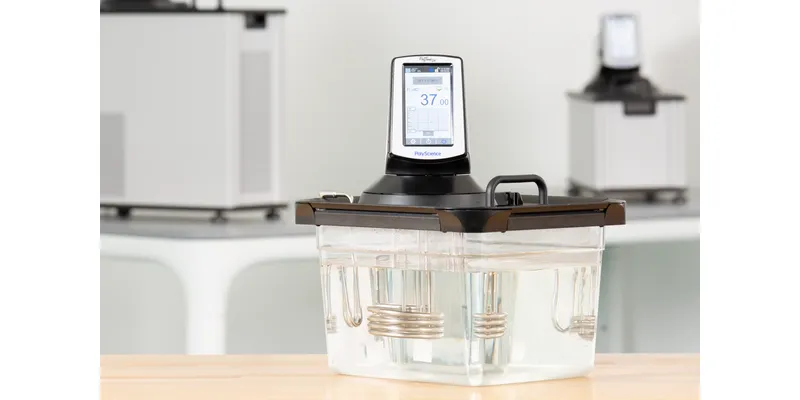
Utility consumption is a major factor in the environmental impact of engineering labs. To combat this, Waterloo installed a new reverse osmosis system that purifies water without chemicals. Furthermore, the team modified existing mechanical equipment to recirculate and reuse utility water, thereby significantly reducing municipal water consumption.
Based on total water consumption over the past 10 years, the two units with the new water circulation system are expected to save approximately 250 cubic meters of water per year. "Labs are areas of high resource intensity, and the team has identified meaningful activities for operational improvement," says Mat Thijssen, Waterloo’s director of sustainability. Lab managers can achieve immediate energy and water efficiency by switching from single-pass cooling to recirculating systems.
Building a blueprint for sustainable operations
The success of the University of Waterloo Department of Chemical Engineering demonstrates that achieving "Gold" status in sustainability requires a three-pronged approach: operational efficiency, digital innovation, and cultural change. Lab managers should view these findings as a prompt to evaluate their own facility's resource intensity.
Whether through the adoption of virtual reality to minimize chemical use or the installation of water-saving technologies, these measures do more than protect the planet—they streamline operations, reduce waste-management costs, and prepare the next generation of scientists to lead a sustainable industrial future. Organizations looking to verify these gains can explore structured certification frameworks to drive measurable environmental performance.
This article was created with the assistance of Generative AI and has undergone editorial review before publishing.