The United Nations’ Globally Harmonized System of Classification and Labelling of Chemicals (GHS) is due to be fully implemented in the United States within the year. According to OSHA, “The new standard covers over 43 million workers who produce or handle hazardous chemicals in more than five million workplaces across the country. The modification is expected to prevent over 500 workplace injuries and illnesses and 43 fatalities annually.”
Where the previous (1994) standard allowed chemical manufacturers and importers in the United States to convey hazard information on labels and material safety data sheets in whatever format they chose, the GHS standard provides a single set of criteria that can be used around the world not only to classify chemicals according to their health and physical hazards, but to convey those hazards via universal hazard communication elements in labeling and safety data sheets.
The map below shows in red the countries that have, to some notable degree, already implemented the GHS.
 Countries that have already implemented the GHS.Image credit: Atlantic Training
For your convenience, OSHA has prepared a side-by-side comparison of the old HazCom Standard (HCS 1994) against the Revised Hazard Communication Standard (HCS 2012). While it is no doubt important for those most concerned with implementing these standards in their workplace to become familiar with the ins and outs of these changes, we wanted to take a practical look at just one aspect of the new standard—labels, and, in particular, the new pictograms.

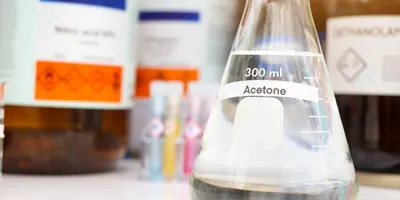
Labels
Under the new system, chemical manufacturers and importers must provide on any chemical a label that includes a signal word, pictogram, hazard statement, and precautionary statement for each hazard class and category. The GHS uses a total of nine pictograms, though OSHA will only enforce the use of eight (the environmental hazard pictogram is not mandatory). There is a lot of information out there about how these labels are to be used and the processes for classification, but not as much about what they actually mean in terms of worker reality. So, below, we take a look at the practical implications of the new GHS labels.
Most of the information here has been curated from OSHA’s Hazard Communication Standard Pictogram Quick Card, OSHA’s detailed Hazard Classification Guidance for Manufacturers, Importers, and Employers, and the UN document “Globally Harmonized System of Classification and Labelling of Chemicals (GHS).” In general the information provided in these last two documents is very similar, but we have noted where in each you can find detailed information on the particular hazard question (OSHA section/ GHS Chapter).
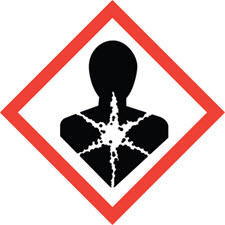 Health HazardCarcinogens (VII.6/ 3.6): A substance or a mixture of substances which induce cancer or increase its incidence in living cells. These include a wide variety of chemicals as well as radioactive substances. OSHA, NTP, and IARC list the specific chemicals they consider to be carcinogens (VII.6.2).
Mutagenicity (VII.5/ 3.5): This means that a substance is capable of causing permanent genetic changes that can be passed on from parent to child.
Genotoxic and genotoxicity. These apply to agents or processes which alter the structure, information content, or segregation of DNA, including those which cause DNA damage by interfering with normal replication processes, or which in a non-physiological manner (temporarily) alter its replication. Positive genotoxicity test results are usually taken as indicators for mutagenic effects.
Reproductive Toxicity (VII.7/ 3.7): These are chemicals that can interfere with any stage of reproduction, from sexual function and fertility to developmental problems in utero.
Respiratory Sensitizer (VII.4/ 3.4): This is a substance that induces hypersensitivity of the airways that can result in severe allergic reactions and asthma, either of which can be fatal. Poison Ivy is a common example of a respiratory sensitizer, but others can be much more damaging.
Target Organ Toxicity (VII.8 & 9/ 3.8 & 3.9): This generally refers to substances that can be damaging to a specific, usually internal, organ such as the kidneys or nervous system. This category of hazard is divided into single-exposure and repeated- or prolonged-exposure, according to how much contact is required to cause damage.


Lab Safety Management Certificate
The Lab Safety Management certificate is more than training—it’s a professional advantage.
Gain critical skills and IACET-approved CEUs that make a measurable difference.
Aspiration Toxicity (VII.10/ 3.10): In short, an aspiration toxicity hazard indicates a substance that may cause a person to asphyxiate due to a blockage of the airway. (Aspiration refers to the entry of a liquid or solid chemical directly through the oral or nasal cavity, or indirectly from vomiting, into the trachea and lower respiratory system.)
Aspiration toxicity, then, includes severe acute effects such as chemical pneumonia, varying degrees of pulmonary injury or death following aspiration, but the aspiration of a substance or mixture can also occur due to vomiting following ingestion.
Simple Asphyxiants (VII.11): A substance or mixture that displaces oxygen in the ambient atmosphere, and can thus cause oxygen deprivation in those who are exposed, leading to unconsciousness and death.
 FlameFlammables are materials that are (1) easily ignited and (2) burn with extreme rapidity. Their danger is self-explanatory. The nature of that danger, however, can be classified in different ways. They include flammable:
• Aerosols (VIII.3/ 2.3)
• Liquids (VIII.6/ 2.6),
• Solids (VIII.7/ 2.6), and
• Substances that Emit Flammable Gas (VIII.2 & VIII.11/ 2.2 & 2.12)
as well as:
Pyrophorics (VIII.9/ 2.9-2.10): These are substances that ignite spontaneously on contact with air at relatively low temperatures (cooler than 130°F). Obviously sudden flames that only require air pose a slightly higher risk than those that require a heat source for ignition.
Interested in lab health and safety?

Self-Heating Chemicals (VIII.10/ 2.11): With a self-heating substance, its gradual reaction to or mixture with oxygen in air generates heat. If this happens at a faster rate than it is able to expel that heat, the temperature of the substance or mixture will rise, which can lead to self-ignition and combustion.
Self-Reactives (VIII.8/ 2.8): These are thermally unstable liquids or solids that are liable to undergo a strongly exothermic (heat-producing) decomposition even without being exposed to air. This means that they can burn without flames and that usual methods of suppression may not be effective.
Organic Peroxides (VIII.13/ 2.15): The two oxygen atoms of the “peroxy” group make them both useful as accelerators, activators, and catalysts and hazardous as chemically unstable substances. They decompose easily, and when they do, they give off heat at a rate that increases as the temperature rises. This means that they can catch fire easily and burn very rapidly and intensely. Additionally, many organic peroxides give off flammable vapors as they decompose, which can also catch fire easily.
Combustible Dust (VIII.15 ): A combustible dust is basically any fine material that can catch fire and explode when mixed with air. The catch is that an awful lot of things we don’t always think of as combustible become so when ground into a fine dust—sugar, flour, powdered milk, plastics, even many metals.
 Exclamation PointIrritant (skin and eye) (VII.2, VII.3/ 3.2, 3.3)
Eye irritation (as opposed to damage): Produces changes in the eye that are fully reversible within 21 days of contact.
Skin irritation (as opposed to corrosion or sensitization): Produces reversible damage to the skin following contact for as long as 4 hours.
Skin Sensitizer (VII.4): A substance that, similar to the respiratory sensitizer mentioned above, can cause an allergic response following skin contact.
Harmful Acute Toxicity (as opposed to fatal or toxic) (VII.1): Toxicity essentially means that a substance is poisonous, in this case causing harm, but not likely death, upon oral ingestion, skin contact, or inhalation exposure. Symptoms can vary, and chemicals known to be fatally toxic will also carry the “skull and crossbones” pictogram. Chemicals with fatal or toxic acute toxicity classifications receive the “skull and crossbones” pictogram.
Narcotic Effects: Symptoms of narcosis include drowsiness, difficulty in concentration, and mood changes—all dangerous on the job<em-dash>but can progress to slurred speech, dizziness, loss of coordination, and, in more severe cases, loss of consciousness, coma, and death. Though narcotic effects are usually reversible, the accidents that can result from them are not.
Respiratory Tract Irritant: This is not just your common dust that gets in your throat and makes you cough. Common conditions caused by respiratory tract irritation include chemical pneumonia, bronchitis, asthma, emphysema, and others.
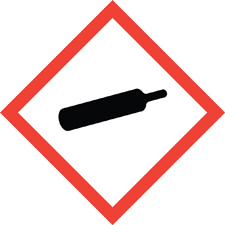 Gas Cylinder
Gases Under Pressure VIII.5 / 2.5: Compressed gases contained in a receptacle at a pressure of 200 kPa (29 psi) (gauge) or more and liquefied, dissolved, or refrigerated liquefied gases. Many compressed gases are toxic or very toxic and can flow very quickly from a compromised container. Flammable gases stored in this way can, of course, pose a threat of explosion, and damaged containers have been known to act as “rockets,” moving at high velocity until the pressure becomes exhausted.
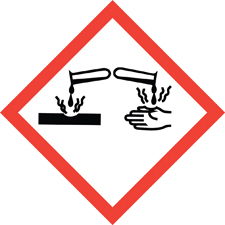 CorrosionIn toxicology, the term “corrosive” normally means causing visible destruction of the skin, eyes, or the lining of the respiratory tract or the gastrointestinal tract on contact; chemically, it refers to a substance that is able to destroy living cells.
Skin Corrosion/Burns (VII.2/ 3.2): Skin corrosion is qualified as the production of irreversible damage to the skin in the form of visible necrosis (death of cells) through the surface skin into the dermis. Corrosive reactions result in ulcers, bleeding, bloody scabs, and discoloration due to blanching of the skin, areas of alopecia (baldness), and scars.
Eye Damage (VII.3): Serious eye damage refers to the production of tissue damage to the eye or serious decay of vision that is not fully reversible within 21 days. The obvious result is blindness or partial blindness.
Corrosive to Metals (VIII.14 / 2.16): Contact with chemicals that are corrosive to metals can damage containers, equipment, installations, and building components, creating unsafe work environments. Further, when certain acids attack metals, they often give off flammable hydrogen gas, which can burn or explode if an ignition source is present. For OSHA’s purposes, this particular classification applies only to chemicals that corrode steel and/or aluminum.
 Exploding BombExplosives (VIII.1/ 2.1): Explosive chemicals are unstable materials which can release enough energy or force to damage the surrounding area, including people. These substances may or may not require a certain temperature / pressure to ignite and may or may or may not require external detonation.
Self-Reactives (VIII.8/ 2.8): Also marked with the “Flame” pictogram, these are those thermally unstable liquids or solids that are liable to undergo a strongly exothermic (heat-producing) decomposition even without being exposed to air. This means that these reactions can take place inside of containers, creating pressure and risk of explosion, and will continue to burn once dispersed.
Organic Peroxides (VIII.13/ 2.15): From the flammable group, these chemically unstable substances decompose easily, and when they do, they give off heat at a rate that increases as the temperature rises. Many organic peroxides give off flammable vapors as they decompose, adding to pressure that may increase explosion risks.
 Flame Over CircleOxidizing Gases (VIII.4 / 2.4), Oxidizing Liquids and Solids (VIII.12 / 2.13 & 2.14): Oxidizers are chemicals that can initiate or greatly accelerate the burning of fuels by bringing about an oxidation reaction, making more oxygen available to burn. Some oxidizing agents do this so quickly that they are classified as explosives. In practical terms, oxidizing agents (1) Intensify combustion, (2) Widen the flammable range of flammable gases and liquids, and (3) Lower the flashpoints and ignition temperatures of combustible materials, causing them to ignite more readily, all of which contribute to significant fire hazard.
 Skull and CrossbonesFatal or Toxic Acute Toxicity (VII.1 / 3.1): The HCS 2012 classifies chemical agents as acutely toxic based on the number of deaths that occur following brief (acute) exposure of test animals. Acute toxicity refers to those adverse effects occurring following oral or dermal administration of a single dose of a substance, or multiple doses given within 24 hours, or an inhalation exposure of 4 hours. Acutely toxic substances are classified as Category 1-5. Categories 1 & 2 have been determined to be fatal to humans, Category 3 toxic (causing severe illness), and 4 & 5 harmful. Categories 1-3 are labelled with the skull and crossbones and carry the signal word “danger.”
 Environment (non-mandatory)Aquatic Toxicity (GHS Chapter 4.1): Aquatic toxicity measures the ability of a substance to be harmful to organisms in an aquatic exposure. Essentially, substances carrying this pictogram in their label are likely to cause harm to fish and other aquatic life after short exposure (acute aquatic toxicity), over the lifecycle of a creature (chronic aquatic toxicity), or through bioaccumulation (the net result of uptake, transformation, and elimination of a substance in an organism due to all routes of exposure). While these substances may not be immediately harmful to humans (though many of them may), the effects they may have on local resources is worth considering as a hazard to local workers.
Of course, there are many other aspects of hazard communication, all of which play an essential role not only in ensuring that standards set by law are met, but in protecting the health and safety of workers and work sites. Ensuring that hazards are properly labeled and that workers have a clear understanding of their seriousness can go a long way toward preventing serious and potentially fatal injury to workers and others.
Atlantic Training, http://www.atlantictraining.com.