The life sciences are part of a growth industry. According to Deloitte Touche Tohmatsu’s 2015 global life sciences sector outlook, global health care spend will grow 5.2 percent annually through 2018. An aging population and the demand for more personalized medicine are the prime movers here, and that demand accounts for an unprecedented growth in diagnostic testing and drug discovery labs all over the world. The work going on in these facilities involves advancements such as next-generation DNA sequencing and molecular imaging. However, the labs doing this delicate work have not grown in size, despite the growing number of tests being performed and test instruments used. At the same time, the number of lab technicians has only continued to hold steady at best, as the economics of health care continue trying to restrain ever-growing costs.
These market dynamics result in five major trends driving lab instrumentation in the life sciences.
1. Smaller equipment
Smaller labs with fewer staff require smaller, more automated lab equipment. Smaller instruments are being developed by placing fluidics components supporting robotics as close to the samples as possible. In the past, pumps and valves would go in the rear or the bottom of the instrument and then plumb up to a dispensing device—typically a probe that automated the delivery of fluid into a well plate. Today, fluidic components are small enough to sit directly on top of the probe.
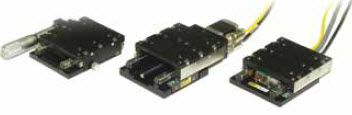 High-precision miniature linear stages measure just 25 mm high and 80 mm wide.Related Article: Well in Hand
Ever increasingly, powering the robots in these systems are integrated direct drive servomotors. Instead of attaching these motors to an existing assembly with typical couplings, new generations are being built with the motors integrated into assemblies. This helps the instrument OEM reduce the number of parts while the remaining parts have multiple uses. This results in not only smaller equipment but also simpler, more modular designs.
2. Higher throughput
To drive more throughput from the same footprint, OEMs are pushing their motion system designs to go faster than ever. Robust miniature stages can now accelerate, decelerate, and settle very quickly so the next operation in the system can happen faster. Stages designed around specific linear motion drivetrains can meet an OEM’s desired footprint and application specs. The result can be a shorter sample-move distance, which helps boost throughput. Combined with modularity, this results in lab equipment with more embedded test capabilities. The robotics built into these instruments can service multiple test stations, taking over procedures that used to be handled by people, and therefore reducing the chance of running the wrong tests on the wrong samples or mixing samples.
3. Smaller samples
Labs are processing a greater variety of expensive chemicals and reagents in smaller quantities to conserve costs. They are driving their instrument manufacturers to reduce their cost of ownership of this equipment, and that is resulting in the processing of smaller samples—from test-tube size down to the tiny wells in microtiter trays. Miniature positioners can automate the exact placement of samples in these trays. In addition, automated analyzers can use valves that handle higher pressures, enabling these smaller sample and reagent volumes. Typical pressures here are 30 psi, but this should soon jump to 50 to 80 psi as piezo devices increasingly replace solenoid coils in actuators. Piezo devices provide significantly more force than solenoids, allowing higher-pressure flows and higher throughput.
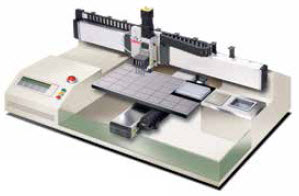 Microarray analysis permits scientists to detect and analyze thousands of genes in an array simultaneously. Microarray spotting demands high speed and precise positioning to achieve array density and production throughput requirements.The newer valve designs have also cut down on sample contamination. A shear valve closes off the fluid path between the samples or the reagents, resulting in limited carry-over to the next sample.
4. Modularity
The modularity of these more complex and more functional instruments is driving benefits at both the OEM and laboratory levels. For the OEM, modularity means they can develop new systems more quickly by repurposing industry-proven designs into their own next-generation instrumentation. In addition to reducing the design cycle, this approach speeds designs through the FDA cycle and results in instruments with fewer overall field service issues. Both the motion and fluidic systems are prime candidates for modular assemblies that can be designed and manufactured by the OEM or industry suppliers, depending on the core competency of the OEM.
For the laboratory, modularity means instruments are continuing to expand their functionality and their ability to communicate with one another while maintaining the simplicity that allows current lab staff to keep improving productivity.
5. Simpler fluidics in robotic analyzers
The robotic technology being developed to dispense and handle lab samples is not only smaller but also no longer has complicated networks of tubing and connection points. Replacing them are manifolds with integrated piping. Clinical laboratories and hospitals can’t afford to have an instrument go down when critical samples are involved, so less tubing means less chance for failure. The manifolds minimize the chance for leakage and eliminate the work an employee at a test bench must perform to integrate 30 pieces of tubing.
The future
One of the biggest areas of growth in the life sciences is processing cellular therapies. Very specific cell types are being isolated and engineered to perform very specific functions. Some of the most promising cancer treatments are based on this type of cellular therapy. The process technologies used in the laboratories doing this work are still expensive and manual, however. That means the potential for automation in the life sciences is still huge, as is the level of precision yet to be enabled by technology providers.