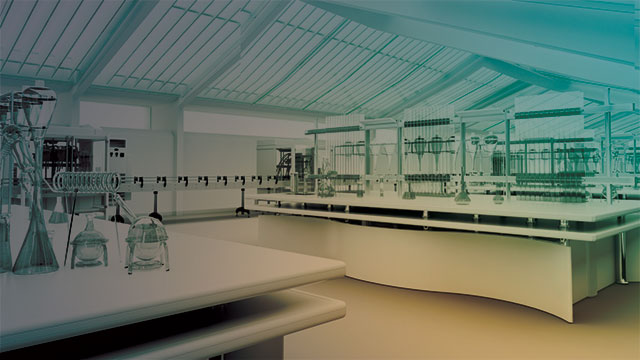
The scientists, students, maintenance people, and administrators that use and manage college and university science laboratories are integral to not only planning what is needed and wanted, but also why.
Providing the architects with sufficient information requires meaningful planning discussions with a full spectrum of institutional people. Often, the lab manager will rank as a key decision maker, but input from principal investigators, operational and maintenance teams, and the administrators responsible for allocating resources is indispensable.
Their combined input can ensure that a facility is both optimized for controlling laboratory processes and set up for effective operational control of building systems. Here’s how.
Optimizing processes foundational step
Optimizing processes is at the heart of lab planning. For example, sequencing DNA in a lab requires a definitive workflow that extends from sample extraction through the prep room, into the sequencing room, and then into a local or remote bulk storage system. The precise protocols followed at each of these steps ensure the purity of the sample and the integrity of the data obtained from the process.


Lab design enables (or disables) processes such as DNA sequencing. Designers must understand the way the different spaces interact with each other as they are passed through along the research material pathway. Designers must also understand the mechanical and electrical requirements of each of the spaces as well as the design principles related to the efficient operation of each.
Related Article: Future Labs
Then there are bulk sample storage areas. These can reside in less desirable—or less expensive—spaces, but it remains important to plan ways that samples can travel efficiently through the building—from receiving to storage to lab and back to storage.
Laboratory space comes in two basic kinds or zones. First, there is research space where researchers feel comfortable and productive. These are the best spaces in the building, perhaps with lots of glass to provide views and plenty of natural light, plus HVAC systems designed to meet human and scientific needs.
Colleges and universities can select from a number of different trends in laboratory design today. At a conceptual level these trends typically involve determining how bench and lab space relate to lab support space, and how support space relates to office space.
These decisions must be made early, during the planning phase. As with many planning decisions, the culture of the institution will provide a major influence on the adjacencies of the three different kinds of space. Two key considerations here are the particular science to be practiced in the building and what the institution wants the building to do for the campus or institutional reputation.
With these thoughts in mind, key planning considerations include materials and consumables, security protocols, mechanical system maintenance, and technology.
Planning space for materials and consumables
Laboratories usually provide for the handling of materials and consumables in one of two ways.
First, each research group would be responsible for its own needs. Each would order, purchase, accept delivery, store, and handle for itself. Then you could provide separate storage areas for each of the individual research groups. This can make for an inefficient use of space.
In a second scenario, the institution might decide to centralize some of the basic gases and basic consumables and then charge a per diem or some kind of storage rate to the research groups. With this plan, all the purchasing, delivering, and storage could be centralized in the building and make more efficient use of space. On the downside, it might cost the institution a bit more because additional personnel have to come on board to manage the central purchasing and storage areas, but those costs can be factored into per diem charges.
Related Article: Designing for Science
Another consumables decision to consider during early planning involves glass-washing facilities. Some lab designs include a fully staffed centralized glass-washing, sterilization, and packaging facility. Researchers don’t have to concern themselves with this chore.


Lab Management Certificate
The Lab Management certificate is more than training—it’s a professional advantage.
Gain critical skills and IACET-approved CEUs that make a measurable difference.
On the flip side, some designs provide glass-washing facilities for each research group. Spreading glass washing throughout the facility can be less efficient in terms of space and costs for energy, water, and equipment.
Planning to accommodate security protocols
Closely interconnected with materials and consumables is security in the planning process. Laboratory security has four basic goals: identifying areas of public access where anyone may go; controlling access to spaces and rooms where researchers work; protecting intellectual property; and controlling access to hazardous materials.
 1. Planning labs with a complete team of people who are connected to the facility and its use enables designers to deliver a fully optimized facility.Photo credit: Alan Karchmer 1. Planning labs with a complete team of people who are connected to the facility and its use enables designers to deliver a fully optimized facility.Photo credit: Alan Karchmer |  3. Research spaces are often the best in the building, perhaps with lots of glass to provide views as well as plenty of natural light plus HVAC systems designed to meet human and scientific needs.Photo credit: Tom Holdsworth 3. Research spaces are often the best in the building, perhaps with lots of glass to provide views as well as plenty of natural light plus HVAC systems designed to meet human and scientific needs.Photo credit: Tom Holdsworth |
 2. Designers must understand the changing mechanical and electrical requirements of each of the spaces as well as the design principles related to the efficient operation of each.Photo credit: Tom Holdsworth 2. Designers must understand the changing mechanical and electrical requirements of each of the spaces as well as the design principles related to the efficient operation of each.Photo credit: Tom Holdsworth |  4. Laboratory security has four basic goals: identifying areas of public access where anyone may go; controlling access to space and rooms where researchers work; protecting intellectual property and controlling access to hazardous materials.Photo credit: Tom Holdsworth 4. Laboratory security has four basic goals: identifying areas of public access where anyone may go; controlling access to space and rooms where researchers work; protecting intellectual property and controlling access to hazardous materials.Photo credit: Tom Holdsworth |
Clarity is the key starting point for effective security planning, and it begins with a red pen and a diagram of the lab. Use the pen to outline security areas and access doors—and do so with the entire building committee as well as the campus public safety and security directors.
Where is the general public permitted and where is it not? Areas closed to the public need secured doors controlled with readers and access cards or other security devices stronger than traditional keys.
Interested in lab leadership?
For spaces requiring high security, two-factor access control can be used. One-factor security requires one method of identification defined as something you have—an access control card, a PIN, or perhaps a biometric such as a fingerprint.
Related Article: A Q&A with Select Lab Design Experts
Two-factor security adds a second factor. For instance, one two-factor system might require presenting an access control card to a reader and then touching a fingerprint reader.
As more factors are added, security becomes tighter and tighter.
The appropriate level of security for a lab depends on the sensitivity of the research being done there and the nature of the materials being used.
Finally, it is important to discuss a lab security plan with the fire marshal or other building official responsible for inspecting and certifying egress paths for the building.
Planning mechanical systems and maintenance
As noted in the discussion of security, science laboratories often contain spaces that work with sensitive intellectual property and hazardous materials—spaces where the general public is not permitted due to confidentiality or public safety concerns.
With that in mind, some universities view school or privately employed maintenance and repair crews as members of the public who may not have free access to all laboratory spaces.
As a result, many lab designs incorporate mechanical, plumbing, and electrical systems “outside” of the laboratory proper. Three designs can accommodate this need.
For low buildings with relatively small floor plates, all the building systems may be located in the penthouse or basement and serviced there.
Related Article: Three Case Studies: Laboratory Expansion
Larger facilities with more than two floors preclude the penthouse strategy. These buildings can incorporate an interstitial design where there is another floor for mechanical equipment and maintenance personnel can access only that floor. However, this scheme approaches twice the cost of a traditional building. A hybrid approach is using an interstitial corridor that intermixes the mechanical spaces with the laboratory spaces. This concept is similar to the sterile and dirty corridors of hospitals and surgical suites.
Life-cycle costs
The foregoing are basic laboratory planning issues. The planning committee should consider each of these issues in light of life-cycle building costs.
Life-cycle building costs include the cost of design, materials, labor, and maintenance, and replacement costs over the 50- to 100- year life of the building.
Planners can direct designers and architects to opt—whenever possible or advisable—for the lowest life-cycle costs by specifying building components that will last for the planned life of the building or at least provide the lowest maintenance and replacement costs.
Related Article: Green Lab Design: Mostly About Air
That, of course, will raise the ‘first cost’ of the building. The architects can also produce an analysis that will compare the first-cost premium with the lifetime costs for maintenance and replacements for higher first-cost and lower first-cost building systems.
Such a cost comparison is the reason for planning at this level of detail. It will produce a better building that will, over its lifetime, save a great deal of money for the college or university.
Planning labs with a complete team of people who are connected to the facility and its use enables designers to deliver a fully optimized facility.