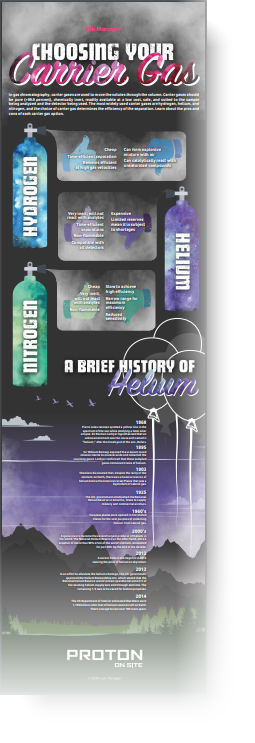
In gas chromatography, carrier gases are used to move the solutes through the column. Carrier gases should be pure (>99.9 percent), chemically inert, readily available at a low cost, safe, and suited to the sample being analyzed and the detector being used. The most widely used carrier gases are hydrogen, helium, and nitrogen, and the choice of carrier gas determines the efficiency of the separation.
Access the full infographic, compliments of Proton OnSite.