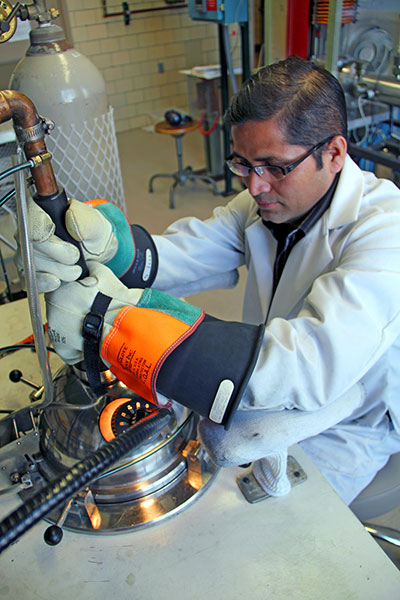
The new alloy—a potential replacement for high-performance permanent magnets found in automobile engines and wind turbines--eliminates the use of one of the scarcest and costliest rare earth elements, dysprosium, and instead uses cerium, the most abundant rare earth.
The result, an alloy of neodymium, iron and boron co-doped with cerium and cobalt, is a less expensive material with properties that are competitive with traditional sintered magnets containing dysprosium.

To continue reading this article, sign up for FREE to

Membership is FREE and provides you with instant access to eNewsletters, digital publications, article archives, and more.
Already a member? Login Here