Choosing Your Carrier Gas

Carrier gases often affect the efficiency of a separation

Written byLab Manager
| 1 min read

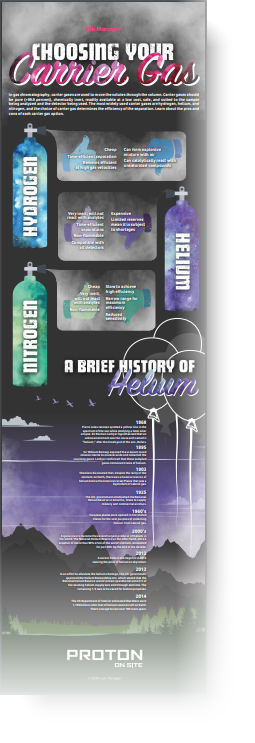
In gas chromatography, carrier gases are used to move the solutes through the column. Carrier gases should be pure (>99.9 percent), chemically inert, readily available at a low cost, safe, and suited to the sample being analyzed and the detector being used. The most widely used carrier gases are hydrogen, helium, and nitrogen, and the choice of carrier gas determines the efficiency of the separation.

Access the full infographic, compliments of Proton OnSite.

Add Lab Manager as a preferred source on Google

Add Lab Manager as a preferred Google source to see more of our trusted coverage.

Related Topics

Loading Next Article...

CURRENT ISSUE - January/February 2026

How to Build Trust Into Every Lab Result

Applying the Six Cs Helps Labs Deliver Results Stakeholders Can Rely On

Lab Manager January/February 2026 Cover Image