


Lab Safety

Last month I took a mini vacation to Northern New Mexico, a place I fell in love with years ago when I drove from my home state of California to New York after college. Taos and the surrounding area offer some of the most enchanting landscapes I’ve ever seen.

Young people’s brains cope with stress in a completely different way to adults, in complete contrast to the conventional wisdom that the brains of humans of all ages act similarly. This is the conclusion of a study conducted on rats at the University of Haifa. The study found that young rats not only extinguished fear much more rapidly, but that while in adult rats the plasticity of the prefrontal cortex declined, among young rats a different mechanism actually enhances plasticity.

There is a widening gulf between how safety is practiced in industry compared to how it is practiced in research laboratories, especially in academic settings.

No, this is not an article about anger management. Nor is it about climate change or the T-1000 Terminator returning. If you have spent much time in a laboratory, you have most likely dealt with it though.

Work presented at the 169th Acoustical Society of America Meeting in Pittsburgh may have benefits from the office cube to the in-patient ward.

Nanomaterials commonly used in sunscreens and boat-bottom paints are making sea urchin embryos more vulnerable to toxins, according to a study from the University of California, Davis. The authors said this could pose a risk to coastal, marine and freshwater environments.
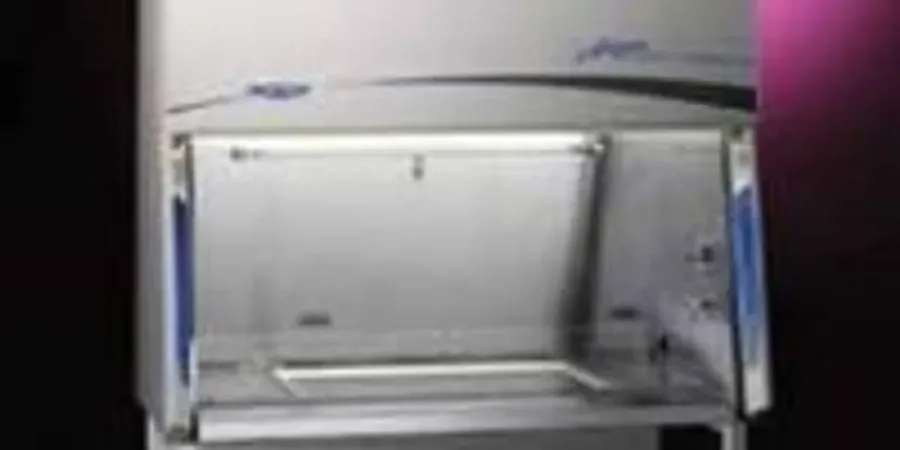
Abstract: A new Type of Class II BSC has emerged that will simplify the selection process and provide true flexibility in modern laboratories needing both chemical and biological protection. Along with 3rd party validation in biological challenges by NSF International®, the Purifier Axiom Class II BSC was put under
ASHRAE 110 containment testing for chemical hazards to verify its ability to handle chemical hazards as well as a fume hood.

Ohio State study shows dramatic stress reduction among ICU nurses

Join our industry expert for an interactive discussion of the latest biological safety cabinets (BSCs) designed to protect your lab from unwanted or hazardous fumes, dusts, biological contaminants, and vapors.
Available on Demand
A new film from the University of Cambridge looks at how mice are helping the fight against cancer and the facilities in which they are housed, and explores issues of animal welfare and the search for replacements

While a May 20 ruling by a Manhattan Supreme Court Justice appeared to grant legal personhood to two research chimpanzees from Stony Brook University, the Nonhuman Rights Project later clarified that the judge will hear arguments on whether or not the chimps will remain at the university and whether or not they could be considered "persons" in the eyes of the law, but has not yet made a final decision granting them legal personhood.

To what extent are awareness initiatives grounded in evidence?


