Analytical assay validation is a cornerstone of reliable laboratory practice, directly impacting the accuracy of data used for critical decision-making, regulatory submissions, and quality control. This article provides a comprehensive overview of the principles and procedures required for robust assay validation across both chemical and microbiological applications, highlighting the importance of these processes in maintaining data integrity, particularly within regulated fields like food testing and pharmaceutical QA/QC.
Defining the fundamental pillars of robust assay validation
Achieving reliable analytical results requires demonstrating that the method is fit for its intended purpose through rigorous testing against a set of predefined acceptance criteria. These core validation parameters are universally applied to establish the foundational integrity of any new or modified procedure.
Key validation characteristics
The International Council for Harmonisation provides the gold standard guidance for analytical procedure validation with the release of ICH Q2(R2) (Validation of Analytical Procedures) and ICH Q14 (Analytical Procedure Development). While microbiological assays have unique considerations, these core characteristics still guide the overall validation strategy.
Characteristic | Definition | Relevance |
|---|---|---|
Accuracy | The closeness of test results to the true value. | Confirms the method measures what it is intended to measure without bias. |
Precision | The degree of agreement among individual test results when the procedure is applied repeatedly. | Assessed as repeatability (same lab, same analyst, short time) and intermediate precision (different days, analysts, equipment). |
Specificity | The ability to unequivocally assess the analyte in the presence of components that may be expected to be present, such as impurities, degradants, or matrix components. | Crucial for complex samples, especially in biological or environmental matrices. |
Limit of Detection (LOD) | The lowest concentration of an analyte in a sample that can be reliably detected, but not necessarily quantified. | Essential for impurity testing and screening methods. |
Limit of Quantification (LOQ) | The lowest concentration of an analyte that can be quantitatively determined with acceptable precision and accuracy. | Used for assays quantifying low-level components. |
Linearity & Range | The ability of the method to elicit test results that are directly proportional to the concentration of analyte in the sample. Range is the interval between the upper and lower concentrations where the method performs with acceptable precision, accuracy, and linearity. | Defines the operational limits of the assay validation. |
Robustness | The capacity of an analytical procedure to remain unaffected by small, deliberate variations in method parameters. | Confirms the procedure's reliability under normal operational conditions. |
Demonstrating the successful meeting of acceptance criteria for these parameters is non-negotiable for any successful assay validation.

Distinctive validation approaches for chemical versus microbiological assays
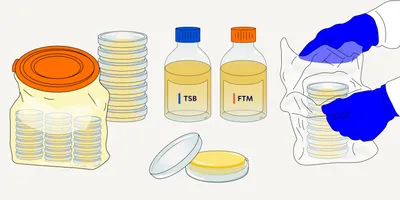
While the objectives of accuracy and precision remain common, the validation strategies for chemical and microbiological assays diverge significantly due to the inherent differences in their analytes and matrices.
Chemical assay validation requirements
Chemical assays, such as high-performance liquid chromatography (HPLC) for drug substance purity or titration for raw material strength, focus on quantifying stable, non-living chemical entities.
- Calibration Standards: Validation heavily relies on traceable, certified reference materials (CRMs) to establish calibration curves and determine accuracy.
- Matrix Effects: Potential interference from the sample matrix (e.g., excipients in a pharmaceutical tablet or components in a food sample) must be systematically evaluated. This often involves spiking known standards into the matrix to test recovery.
- Forced Degradation (ICH Q2(R2)): For stability-indicating assays, the procedure is challenged by intentionally degrading the sample (using heat, humidity, acid, base, light) to ensure the method can separate the analyte from its degradation products, confirming high specificity.
Microbiological assay validation challenges
Microbiological assays, often used in food testing for pathogen detection or in pharmaceutical sterility testing, deal with living, variable organisms, which introduces complexity not found in chemical analysis.
- Organism Variability: Pathogens or indicator organisms exhibit natural variability in growth rate, metabolism, and resistance. Validation must account for strain differences and stress injury (e.g., sub-lethally damaged bacteria from cleaning processes).
- Sample Enrichment and Recovery: Many microbiological methods involve a selective enrichment step. Validation focuses not just on detection but on the method’s capacity to consistently recover and amplify low numbers of target organisms from large sample volumes.
- Limit of Detection (LOD) in Micro: The LOD is often expressed as a probabilistic measure (e.g., detecting one colony-forming unit (CFU) per gram or volume 95% of the time) rather than a continuous concentration. This is frequently assessed using the most probable number (MPN) technique or confirmation of method equivalence to a recognized standard (e.g., ISO 16140).
- Specificity Testing: This involves testing the method against a broad panel of both target (positive) and non-target (negative) organisms, including closely related species, to ensure that the method is both sensitive and highly selective.
Integrating assay validation into quality assurance and control (QA/QC)
The ultimate purpose of rigorous assay validation is to provide confidence in the data generated for QA/QC release decisions. A validated method acts as a critical control point within the quality management system.
Risk-based validation for regulatory compliance
Regulated industries like pharmaceuticals and food testing mandate that all analytical methods used for compliance purposes are validated. A risk-based approach ensures validation effort is commensurate with the potential impact of the assay result on product quality and patient safety.
- Critical Quality Attributes (CQAs): Assays measuring CQAs—characteristics that influence product efficacy or safety—require the most extensive and documented validation.
- Regulatory Framework: Validation protocols and reports are required documentation during regulatory audits. Failure to produce a complete assay validation package can lead to regulatory action. Guidance from bodies such as the Food and Drug Administration (FDA) and official compendia (e.g., USP) must be followed precisely.
- Food Testing Standards: For food testing, validation often aligns with international standards, such as those published by the AOAC International, ensuring that methods used for detecting pathogens like Salmonella or E. coli are globally reliable and defensible.
Method life-cycle management
Assay validation is not a one-time event; it is the first stage in a continuous life-cycle management process spanning method development, validation, routine use, and retirement.
- Validation: The formal, comprehensive study establishing performance characteristics (ICH Q2(R2)).
- Verification/Transfer: Procedures to demonstrate a validated method performs acceptably when transferred to a different laboratory or instrument. This ensures inter-laboratory consistency.
- Ongoing System Suitability: Routine checks conducted immediately before sample analysis to ensure the system (instrumentation, reagents, columns) is operating as expected. System suitability tests are a continuous part of QA/QC.
- Revalidation/Periodic Review: Minor changes (e.g., reagent supplier, minor instrument upgrade) require partial revalidation. Significant changes (e.g., new sample matrix, different instrument principle) require full revalidation. Even without changes, periodic review confirms the method remains current and effective.
Essential documentation and reporting for successful assay validation
Thorough and systematic documentation transforms a series of experiments into a legally defensible and auditable validation package. This documentation demonstrates control over the analytical process.
The three-part documentation structure
Successful assay validation documentation typically follows a three-stage process, ensuring clarity, pre-approval, and final review.
- Validation Protocol: A pre-approved document detailing the validation plan. This includes the purpose, scope, responsibilities, specific validation tests to be performed (e.g., accuracy, precision), acceptance criteria for each test, instrument lists, and required materials. The protocol serves as the commitment document.
- Raw Data: All data generated during the execution of the protocol, including chromatograms, instrument outputs, calculations, laboratory notebook entries, and deviation records.
- Validation Report: The final document summarizing the results. It must clearly state whether each pre-defined acceptance criterion was met or failed, discuss any deviations from the protocol, and conclude whether the method is considered validated and fit for its intended purpose. The report must be signed by the relevant technical experts and quality assurance personnel.
Recommended reference standards for method validation
Adherence to globally recognized standards enhances the trust and acceptance of laboratory data.
- ICH Q2(R2) and Q14 - Analytical Procedure Validation and Development: Provides the standard framework for chemical assay validation for pharmaceutical registration, covering specificity, linearity, range, accuracy, precision, LOD, LOQ, and robustness, and integrates a life-cycle approach to method development. Reference: International Council for Harmonisation (ICH) Q2(R2) and Q14 Guidelines.
- ISO 16140 Series: Applicable to the validation of microbiological methods. ISO 16140-2:2016 is the primary standard addressing the validation of alternative (rapid) methods against a reference method for detecting or quantifying microorganisms in food and environmental samples, while Part 3 covers the verification of these validated methods by end-user laboratories.
- USP <1225> and <1226>: Chapters from the United States Pharmacopeia detailing procedures for validation and verification of compendial methods. These are essential for laboratories operating under current Good Manufacturing Practices (cGMP).
Maintaining data integrity through continuous assay validation management
Adopting a life-cycle approach to assay validation is essential for any laboratory dedicated to QA/QC and regulatory compliance. Continuous monitoring, periodic review, and adherence to global standards ensure that analytical procedures remain robust and the resulting data is always reliable. This proactive management strategy supports both operational efficiency and unwavering data integrity across all testing, from complex chemical assays to high-throughput microbiological screens.
Frequently asked questions about assay validation
What is the primary difference between validation and verification?
Validation is the comprehensive process used when introducing a new or modified analytical method to prove it is suitable for its intended purpose across a full range of parameters (e.g., accuracy, precision, specificity). Verification, typically applied to official or compendial methods (e.g., those from the USP), is a less extensive process that simply confirms the laboratory can successfully perform the established method with acceptable results under its local conditions.


Lab Management Certificate
The Lab Management certificate is more than training—it’s a professional advantage.
Gain critical skills and IACET-approved CEUs that make a measurable difference.
How does assay validation directly impact food testing safety?
In food testing, assay validation ensures that methods used to detect pathogens (like Listeria or Salmonella) or chemical contaminants (like pesticides or heavy metals) are highly specific, accurate, and possess the required limits of detection (LOD). This compliance is essential for preventing product recalls, protecting public health, and meeting regulatory requirements for safe consumption.
When is a partial revalidation of a chemical assay required?
A partial revalidation is necessary when there are minor changes to the method or its environment that could potentially affect performance, but not fundamentally alter the procedure. Examples include changing the brand or batch of a critical reagent, switching to a different instrument model of the same type, or minor adjustments to the sample preparation volume. Full revalidation is reserved for major changes, such as modifying the column chemistry or changing the detection principle.
What is the role of quality assurance (QA) in the assay validation process?
The QA department provides oversight of the entire assay validation process. Their role is to review and approve the validation protocol before execution, ensure adherence to the protocol during testing, and formally review and approve the final validation report. QA's involvement guarantees that the validation was conducted according to the laboratory's quality management system and regulatory standards for QA/QC.
This article was created with the assistance of Generative AI and has undergone editorial review before publishing.