The American Chemical Society (ACS) has released a new report that places laboratory safety at the center of how modern research organizations operate. Laboratory Safety: Then, Now, and in the Future evaluates how academic, government, and industrial laboratories manage chemical hazards, safety training, and risk communication, and it identifies where systems continue to fail despite decades of regulation.
For laboratory leaders, the report arrives at a moment when compliance expectations are tightening, and research environments are becoming more complex. Advanced reagents, high-energy reactions, and increasing workforce turnover have raised the stakes for laboratory safety programs. The report frames safety culture in laboratories not as a secondary administrative function, but as a core element of research integrity and institutional accountability.
Craig Merlic, executive director of the University of California Center for Laboratory Safety, contributed extensively to the report. His work on safety culture, near-miss reporting, and technology-enabled risk management is cited throughout as a model for how institutions can move beyond minimum compliance toward proactive laboratory safety systems.

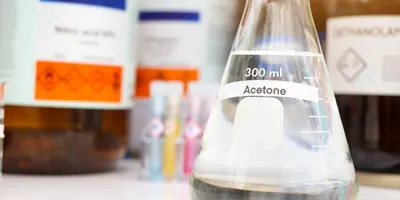
New ACS laboratory safety guidance for research laboratories
The ACS Discovery Report traces how laboratory safety evolved from informal, high-risk practices to today’s regulated environments. Federal standards such as the OSHA Laboratory Standard and the Globally Harmonized System of Classification and Labeling of Chemicals provide the regulatory framework, but ACS argues that these rules alone do not determine whether laboratories operate safely.
The report shows that serious accidents continue to occur in academic, government, and industrial labs, even though they all follow the same baseline regulations. Differences in leadership engagement, training quality, and reporting practices create wide gaps in how laboratory safety is experienced on the bench. For lab managers, this means safety performance will increasingly be judged by how well risks are identified, communicated, and addressed before injuries occur.
How the safety culture in laboratories breaks down
One of the most influential examples in the ACS Discovery Report comes from a university case study led by Merlic on repeated fires involving lithium aluminum hydride. Multiple researchers experienced ignition events with the same reagent, yet none reported near misses. Because the information never reached supervisors or safety officers, the same hazardous practice continued until the pattern became clear.
ACS uses this case to illustrate how a weak safety culture in laboratories allows hazards to persist across multiple users. When near misses go unreported, organizations lose the opportunity to intervene early. The report emphasizes that strong reporting systems, clear accountability, and supervisor engagement are essential components of effective laboratory safety programs.
Digital tools are becoming part of laboratory safety
The ACS report highlights how technology is reshaping laboratory safety management. Electronic chemical inventory systems give researchers immediate access to hazard classifications, storage requirements, and compatibility data when materials are removed from stock. These tools reduce the risk of incorrect handling and improper storage.
Merlic also points to electronic laboratory notebooks enhanced with artificial intelligence. These platforms can generate real-time safety alerts during experiments, such as warnings about dangerous chemical combinations, measurements exceeding safe limits, or reactions trending toward unsafe conditions. By embedding safety checks directly into workflows, laboratories can reduce their dependence on memory and manual review.

Lab Safety Management Certificate
The Lab Safety Management certificate is more than training—it’s a professional advantage.
Gain critical skills and IACET-approved CEUs that make a measurable difference.
For lab managers, this signals a shift toward an integrated digital safety infrastructure rather than paper-based or ad hoc controls.
What the ACS Discovery Report expects lab managers to do next
The ACS Committee on Chemical Safety outlines a national roadmap to improve how safety information is created, shared, and used. The report calls for higher-quality Safety Data Sheets, clearer hazard classification, expanded training, and broader adoption of digital safety tools.
These recommendations place new pressure on laboratory leadership. Inconsistent safety data undermines risk assessments. High staff turnover weakens safety culture unless training is continuous and role-specific. Technology is no longer optional, as manual tracking systems struggle to keep pace with the complexity of modern laboratories.
Together, these changes position laboratory safety as a management system that must evolve alongside scientific capability.
Why this ACS guidance matters for laboratory compliance
Although the American Chemical Society does not regulate laboratories, its guidance shapes how regulators, funders, and publishers define best practice. The ACS Discovery Report calls for stronger standards around chemical safety data, more consistent reporting of safety issues, and wider use of digital systems to reduce error and variability.
For lab managers, this means safety performance will increasingly influence inspections, audits, grant reviews, and institutional risk assessments. The new ACS laboratory safety guidance makes clear that safety culture in laboratories is no longer measured by whether rules exist, but by whether safety systems actively prevent harm while supporting high-quality science.
This article was created with the assistance of Generative AI and has undergone editorial review before publishing.