Despite steadily losing ground to high-performance liquid chromatography (HPLC) over the years, particularly for polar compounds, gas chromatography (GC) remains one of the more rapid and efficient chromatographic methods. Where LC has emerged as the platform of choice for the life sciences, GC remains the standard for “organic” chemical analysis of relatively low molecular weight compounds of medium to low polarity.
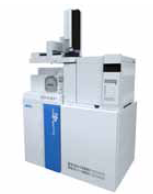 GC-TOF System | AccuTOF GCv|4G | JEOL | www.jeolusa.com Despite being a mature technology, gas chromatography systems were experiencing modest growth in the global market before the current recession. A report by Global Industry Analysts (San Jose, CA), Gas Chromatography Systems – a Global Strategic Business Report, suggests that companies deferred plans to purchase or upgrade GC systems during the downturn but will resume buying as the economy improves.
Interestingly, Europe represents the largest market for GC systems, about 30 percent of the global market, followed by the United States and Japan. According to the report, significant growth is expected in developing countries in the Asia-Pacific region. Still, this “fastest-growing market” will increase at only about 2.2 percent per year. All told, sales of GC systems are estimated to reach $1.2 billion worldwide by 2015.
The report provides few surprises as far as industry segments most involved in GC: chemicals, pharmaceuticals, and petrochemicals (the fastest-growing industry segment). GC users seek the same types of enhancements and workflow improvements as do other instrument specialists, according to the report: improved resolution, more-rapid analysis, higher sensitivity, ease of use, and enhanced, reproducible measurements.
The issues affecting GC markets and end users on the operational side—throughput and productivity—overlap with other instrument categories. For instrumentation, the leading concerns are stationary phase (columns and chemistries), mobile phase (carrier gas), detector, and maintenance.
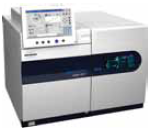 GC Systems | SCION™ Series Bruker | www.bruker.com Efficiency and Productivity
“GC users continue to experience the drive toward improved efficiency and productivity,” observes Eric Denoyer, Ph.D., marketing director for GC and workflow automation at Agilent Technologies (Santa Clara, CA). “Managers are being asked to do more with less time, funding, staff, and skill.”
“Fast” or “rapid” GC is one way to realize these goals. To shorten run times, analysts are adopting microbore columns, which in turn is driving improvements in lowvolume, high-precision liquid autoinjection. Low-thermal-mass devices ramp thermal profiles faster and cool columns more rapidly as well. Denoyer refers to temperature cycling as a “major time hog, especially as GC run times shorten.” Many users are also considering switching to hydrogen from denser, more expensive carrier gases to shorten elution times. These improvements have led to shortening of analysis times, for some applications, by a factor of three or more.
Industry’s obsession with lean staffing has greatly shrunk the pool of GC technical expertise, with remaining holdouts residing mostly at corporate centers of excellence. This has given rise to analyzer “solutions” (versus standalone instruments) being bundled with methods and spectral libraries, which combined reduce start-up, method development, and validation efforts. “Smarter instruments that are more self-aware of their configuration and operating status can help even less-skilled users plan maintenance downtime and avoid costly unplanned shutdowns,” according to Denoyer.
Sample Prep and Automation
To speed sample prep and reduce maintenance due to contaminating matrix and nontarget components, analysts are turning to solid-phase extraction or microextraction to reduce inlet and liner contamination. Also, backflush is becoming more common for reducing column and MS contamination and reducing sample cycle time.
In instances where labs perform the same separations under the same methods at high throughput, sample prep automation can make a lot of sense. In those cases, labs look for more of a complete package than separate instruments, says Dan Carrier, an applications chemist at Anatune (Cambridge, UK), which specializes in GC sample preparation hardware and systems. Anatune packages chromatographs and sample prep hardware from vendors ito a “solution” that includes the GC, the detector, the automation component, prepackaged methods, and application advice.
“Most of these solutions involve some aspect of sample prep that includes either enriching sample in the target analyte, removing the matrix, or both,” Carrier says.
Paradoxically, economic downturns can be a boon for costly automation equipment, as companies can compensate for workers they let go by acquiring automation. “It might add between 25 to 50 percent to the cost of a basic GC,” Carrier adds, “but in the long run, automation can actually save money.”
Autosamplers are the most used and most significant automation upgrade for GC, but also the component most prone to failure. Autosamplers have more moving parts than all the remaining components combined and are mechanically the most complex equipment within a system.
 Quadrupole GC-MS System TSQ 8000 | Thermo Fisher Scientific www.thermoscientific.com Automated sample prep, typically involving a liquid-handling robot, is another feature that high-throughput labs should consider. GC samples come from remarkably varied environments. Ensuring that samples undergo reproducible cleanup is perhaps the most significant quality operation. An almost limitless list of interfering species exists in most raw sample streams, which often requires a degree of human intervention—even with automated sample prep.
What is the tipping point for automating or not automating? Every lab manager must calculate return on investment based on time saved compared with manual operation, as well as the value of consistency and added throughput. Cost-benefit analyses are more straightforward for autoinjectors than they are for sample prep because of the diversity and complexity of GC samples themselves.
But no matter the skill or staffing level, analyzing active or thermally labile compounds at trace levels remains a challenge in many applications,” Denoyer says. “Highly inert deactivation technologies along with increasingly sensitive detectors are major advances that ensure an inert flow path consisting of deactivated inlets, liners, and columns.