Pharmaceutical companies and lab teams are constantly working to bring new therapies to market at a faster pace. To meet demands for speed and quality, labs are embracing automation as part of a shift toward the automated digital lab, enabling scientists to overcome some of the longstanding challenges that have hindered discovery.
Biologics research labs are critical parts of the innovation engine, as they are responsible for the research, development, testing, and manufacturing of treatments and therapies used across disease states. When aiming to speed discovery, lab teams must look to automate routine tasks, such as the steps involved in manual transient transfection and clone selection. By integrating cutting-edge automated shaking incubators, labs can reduce the amount of manual labor and extensive hands-on time needed to produce better results in biologics research at a much faster rate. By leveraging automation, labs can focus on bringing innovative therapies to patients in need.

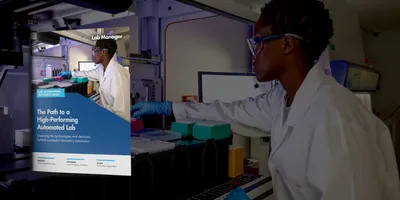
The impact of automated shaking incubators
The move to automation is no longer an option; it is a necessity as we move closer to the automated digital lab. One of the ways that lab teams can begin to integrate the technology into the lab is in manual transient transfection and clone selection processes.
When looking to grow stable cell lines, labs must ensure that they maintain steady conditions. By shaking cell cultures, technicians can bring oxygen to the surface, spread nutrients, stop cells from settling, and maintain the conditions needed for growth.
As labs work to bring new therapies to market faster, automating steps like this in the lab will be crucial. If done manually, scientists must stop the shaking incubator, remove samples one by one, and feed the cell culture every few hours. The time spent on this adds up quickly and results in several hours of wasted time per day. It can also introduce contaminants, which then requires manual cleaning, and disrupt environmental conditions, potentially resulting in yield loss.
With this technology, lab technicians can control the temperature of a sample and maintain a regular shaking pattern even while they are loading and unloading other samples. Automated incubators also reduce the risk of contamination, enabling labs to prioritize speed, precision, and accuracy during complex workflows.
Some next-generation designs for automated shaking incubators include plates with robot-ready lids and internal lid clamping that are lightweight and transition seamlessly into the lab workflow. They also use synchronized drives to ensure that samples in stackers (racks) are in constant motion, even if the plates are handled. This helps lab teams determine the best clones at a faster rate and helps biologics labs move one step closer to the automated digital lab.
Optimizing biologics workflows with automation
Maximizing cell growth is vital for biologics labs that are looking to bring new treatments to market at a faster rate. Even if automation exists in other steps in the workflow, a manual incubator can create a bottleneck that significantly slows progress. With automated shaking incubators, labs can ensure consistent and repeatable outcomes in experiments that help scientists optimize workflows from end to end, ultimately creating one connected lab ecosystem.

Interested in lab design?
When looking to scale up, labs can leverage automated shaking incubators to automate large volumes that accelerate development. The constant stops, unstable environments, and risks of contamination with manual workflows simply cannot keep up. Turning to smarter, more integrated technologies can help labs increase throughput, reduce risk at every touchpoint, and meet the growing demands of the biotherapeutics industry by building out the automated digital lab.
The future of automated shaking incubators
As labs look to adopt automation, managers will need to ensure that workflows and infrastructure are ready to take on these new technologies. By working hand in hand with a trusted analytical technology provider, labs can ensure that scientists will be ready and able to replicate current manual workflows with new systems for seamless adoption as they move toward the automated digital lab.
To meet the rising demand for new therapies and treatments, it’s clear that labs must turn to automation to achieve higher-quality results at a faster rate. And this goes beyond utilizing tools like an automated shaking incubator. Leveraging automation in the lab to enable consistent, repeatable results can enable scientists to bring new therapies and treatments to market faster. As pharma labs evolve, a wholly automated digital lab will become the way of the future.