




Environmental testing laboratories face a relentless throughput challenge: regulatory compliance demands simultaneous quantification of dozens — sometimes hundreds — of contaminants across complex matrices like surface water, soil, sediment, and biosolids. Automated liquid handling is increasingly the operational backbone of high-volume environmental labs, enabling the consistent, traceable, and high-throughput execution of multi-residue sample preparation workflows that manual methods cannot reliably sustain.
Why manual solid-phase extraction creates critical bottlenecks
Manual solid-phase extraction remains the single greatest source of variability in environmental trace analysis. In multi-residue workflows, each sample passes through conditioning, loading, washing, and elution steps that require precise timing and solvent volumes — conditions that degrade with fatigue across a large batch. A single technician error during the conditioning or elution phase can compromise analyte recovery across an entire sample set, requiring costly re-extraction and extending turnaround times.
The scale of the problem grows with regulatory scope. Environmental laboratories are now routinely required to screen for 40 or more per- and polyfluoroalkyl substances (PFAS) in a single analytical run under methods such as EPA Method 1633A, in addition to multi-class pesticide panels, polynuclear aromatic hydrocarbons (PAHs), and semivolatile organic compounds (SVOCs). Processing even a moderate daily batch of 20 to 30 samples under multiple active methods can consume the entire productive capacity of a two-person sample preparation team. Automated liquid handling eliminates this constraint by executing multi-step SPE protocols unattended and in parallel.

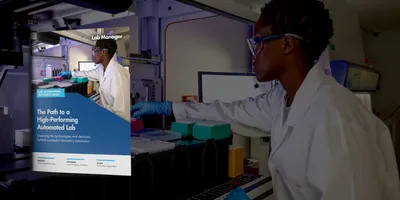
How automated liquid handlers execute SPE workflows

Efficiency in environmental multi-residue sample preparation relies on precision and reproducibility.
GEMINI (2026)
A modern automated liquid handling system configured for environmental SPE operates as a programmable, multi-channel workstation capable of sequentially or simultaneously processing multiple sample positions. The system aspirates and dispenses precise volumes of conditioning solvent, sample matrix, wash solvent, and elution solvent in a defined sequence encoded in the instrument's method file. This programmatic execution guarantees that each cartridge receives identical treatment — something physically impossible to ensure across a large manual batch.
Key workflow steps executed by automated liquid handlers in environmental SPE include:
- Cartridge conditioning: Precise wetting of the sorbent bed with methanol or acetonitrile at a controlled flow rate, ensuring uniform analyte retention.
- Sample loading: Controlled-rate aspiration and delivery of large-volume aqueous samples (250 mL to 1 L) without bed channeling.
- Wash and dry: Automated rinsing with high-purity water followed by vacuum or nitrogen drying to remove residual matrix.
- Elution: Delivery of the elution solvent in defined aliquot volumes into pre-labeled collection vials.
- Internal standard addition: Automated pipetting of isotopically labeled surrogate standards into each extract immediately post-elution to lock in traceability.
Integrating these steps into a single automated sequence eliminates the manual transfer steps that introduce the most contamination risk and analyst-to-analyst variability.
QuEChERS automation for soil and sediment multi-residue screening
For soil and sediment matrices, the QuEChERS (Quick, Easy, Cheap, Effective, Rugged, Safe) method has become the preferred multi-residue extraction approach for pesticides and related contaminants, largely because it avoids the column-based SPE manifold and replaces it with dispersive solid-phase extraction (dSPE). In a manual QuEChERS workflow, the analyst adds extraction salts and solvents to the sample, shakes vigorously, centrifuges, transfers the supernatant, adds dSPE cleanup sorbents, mixes again, and centrifuges once more before a final transfer to the analytical vial. This sequence requires extensive pipetting at each phase transition.
Automated liquid handling platforms are well suited to this workflow because they can execute the aliquot transfers, sorbent additions, and final cleanup dispensing steps with sub-microliter precision across an entire batch simultaneously. A peer-reviewed analysis published in Molecules confirmed that automated QuEChERS workflows applied to 94 multiclass pesticides in soil reliably achieved recoveries within acceptable regulatory ranges (70–117%) using MgSO₄ and primary secondary amine (PSA) sorbents, with automation eliminating the volumetric inaccuracies inherent in sequential manual transfers (González-Curbelo et al., 2022). The evolution of QuEChERS toward fully automated instrument-top sample preparation (ITSP) — using miniaturized, multi-well dispersive SPE formats — further reduces extraction time and solvent consumption for labs running high-volume soil monitoring campaigns.
| Extraction method | Matrix | Automation compatibility | Typical solvent use per sample |
|---|---|---|---|
| SPE (cartridge) | Water, wastewater | High — multi-channel manifold systems | 10–30 mL |
| QuEChERS / dSPE | Soil, sediment, tissue | High — liquid handler for transfers and sorbent addition | 2–10 mL |
| Pressurized fluid extraction (EPA 3545A) | Soil, solids | Moderate — automated extraction, manual transfer | 15–40 mL |
| Liquid-liquid extraction (EPA 3510C) | Aqueous | Low — difficult to fully automate | 50–300 mL |
The solvent efficiency advantage of automated QuEChERS and SPE workflows is increasingly relevant as environmental labs pursue compliance with ISO 14001 sustainability frameworks and seek to reduce hazardous waste disposal costs.
PFAS sample prep: where automated liquid handling is most impactful
PFAS analysis under EPA Method 1633A — which covers 40 PFAS analytes across non-potable water, soils, biosolids, and tissue — represents one of the highest-value use cases for automated liquid handling in environmental laboratories. The method requires large-volume SPE (up to 250 mL of aqueous sample) using weak anion exchange cartridges, followed by multi-solvent elution and concentration. A skilled technician requires three to four hours to complete a single batch of aqueous samples manually; a validated automated SPE system reduces that processing time to approximately two hours per batch, with the critical advantage of running largely unattended (Organtini et al., Waters Corporation application note, 2025).

Interested in lab design?
Beyond speed, the regulatory defensibility of automated PFAS extraction is a compelling argument. EPA Method 1633A carries strict internal standard recovery requirements, and the consistent pipetting performance of an automated liquid handler — holding coefficient of variation well below 5% across multi-channel tips — supports the documentation that regulatory submissions demand. Vendor-validated automated SPE workflows have demonstrated a mean extracted internal standard recovery of 78.2% with a mean RSD of 8.1% across 19 diverse environmental water samples, meeting all EPA 1633A acceptance criteria (Organtini et al., Waters Corporation, 2025). For guidance on selecting the right system for your facility, see Lab Manager's complete buying guide.
Maintaining data traceability and regulatory compliance
Regulatory compliance in environmental analysis is inseparable from data traceability. EPA SW-846 methods — the standard framework for hazardous waste testing — specify not only the analytical procedures but the quality control requirements that labs must satisfy on every analytical batch: method blanks, laboratory control samples (LCS), matrix spikes, and surrogate recoveries (US EPA, SW-846 Compendium). Generating this QC framework manually across dozens of simultaneous samples introduces transcription errors and increases the probability of a QC failure invalidating an entire batch.
Automated liquid handling systems address this systematically. Method files can be configured to add LCS spikes, matrix spike additions, and surrogate standards at defined positions in the run sequence without analyst intervention. When integrated with laboratory information management systems (LIMS), the instrument transfers preparation records electronically, removing the manual data entry step that is a primary source of transcription error. Labs pursuing accreditation under NELAP (National Environmental Laboratory Accreditation Program) or ISO/IEC 17025 benefit directly from the digital audit trail that modern automated liquid handling software generates, recording every dispensing event with timestamps, volume confirmation, and tip identity. Effective maintenance of the automated system is equally important — carryover from residual solvents or matrix components between samples can compromise trace-level environmental data, and proper upkeep protocols are covered in Lab Manager's guidance on keeping automated liquid handling systems performing reliably.
Conclusion: Scaling environmental sample prep with automated liquid handling
Automated liquid handling is no longer a luxury reserved for pharmaceutical high-throughput screening; it is a regulatory and operational necessity for environmental laboratories managing multi-residue, multi-matrix testing programs. By standardizing SPE execution, enabling unattended PFAS batch processing, reducing solvent consumption in QuEChERS workflows, and generating defensible digital audit trails, automated liquid handling directly supports both compliance and laboratory efficiency. Lab managers evaluating automation for multi-residue environmental sample prep should prioritize systems with flexible deck configurations, validated multi-solvent compatibility, and LIMS integration to realize the full operational benefit.
References
- González-Curbelo, M.Á., Varela-Martínez, D.A., and Riaño-Herrera, D.A. (2022). Pesticide-residue analysis in soils by the QuEChERS method: A review. Molecules, 27(13), 4323. https://doi.org/10.3390/molecules27134323
- US Environmental Protection Agency. (2024). Method 1633A: Analysis of per- and polyfluoroalkyl substances (PFAS) in aqueous, solid, biosolids, and tissue samples by LC-MS/MS (EPA 820-R-24-007). https://www.epa.gov/cwa-methods/cwa-analytical-methods-and-polyfluorinated-alkyl-substances-pfas
- US Environmental Protection Agency. (2024). SW-846 test methods for evaluating solid waste, physical/chemical methods: SW-846 compendium. https://www.epa.gov/hw-sw846/sw-846-compendium
This article was created with the assistance of Generative AI and has undergone editorial review before publishing.





