Modern laboratory workflows demand high precision, throughput, and reproducibility. Therefore, transitioning to automated liquid handling represents an important need for many scientific facilities. These automation tools directly address the inherent variability of manual pipetting. They elevate the reliability of experimental outcomes and support compliance with stringent industry standards. By replacing repetitive manual processes with robotics, facilities can reallocate highly trained personnel toward advanced data analysis. This operational shift accelerates assay throughput. According to industry analyses, adopting lab automation can reduce manual labor time by up to 50%, significantly optimizing resource utilization in high-volume research, pharmaceutical, and clinical environments.
Overcoming manual limitations with robotic platforms
Traditional pipetting presents substantial challenges in modern laboratories. The main issues involve reproducibility, throughput bottlenecks, and personnel safety. Manual aspiration and dispensing inherently introduce human error. This is especially true during prolonged assays requiring hundreds of repetitive motions. Variables such as pipetting angle, plunger release speed, and immersion depth fluctuate from user to user. These fluctuations directly impact assay coefficients of variation (CV). Automated platforms mitigate these inconsistencies. They utilize electronically controlled stepper motors to standardize movements, providing highly reproducible parameters regardless of sample volume.

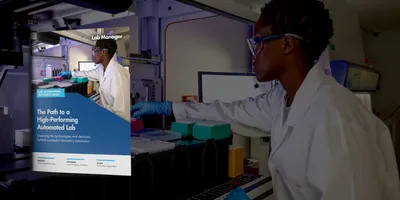
Beyond data integrity, manual pipetting poses severe ergonomic risks. Repetitive thumb and wrist motions frequently lead to repetitive strain injury (RSI), a major occupational health concern. Tasks requiring highly repetitive motion and sustained awkward postures increase the risk of musculoskeletal disorders, according to official OSHA guidelines on laboratory safety. Adopting robotics substantially reduces this physical burden. By mechanizing these tasks, scientific facilities safeguard worker health, reduce absenteeism related to RSI, and foster a safer environment.
Core technologies driving lab automation
Selecting the right equipment requires a thorough understanding of underlying fluid transfer technologies. These systems generally employ one of three primary mechanisms. Each suits specific liquid classes and volume ranges.
Air displacement technology is the most common methodology. These tools use an air cushion between the pipette piston and the liquid. While highly effective for aqueous solutions, they struggle with highly volatile or dense liquids due to air cushion fluctuations. Conversely, positive displacement technology uses a piston that makes direct contact with the sample. This mechanical approach provides superior accuracy when handling challenging fluids. Finally, acoustic dispensing utilizes directed sound waves to eject microscopic droplets from a source plate to a destination plate. While this touchless technology eliminates the need for disposable pipetting tips, it still requires specialized source microplates and precise acoustic calibration systems to function properly.
Table 1: Comparison of fluid transfer technologies (Note: Volume ranges reflect typical industry standards)
Technology | Ideal volume range | Advantages | Limitations |
|---|---|---|---|
Air displacement | 0.5 µL – 5000 µL | Cost-effective, broad availability, highly accurate for aqueous samples. | Sensitive to temperature and liquid properties (viscosity, volatility). |
Positive displacement | 1.0 µL – 1000 µL | Highly accurate for viscous, volatile, and dense liquids. | Requires specialized consumables, typically higher operational costs. |
Acoustic dispensing | 2.5 nL – 500 nL | Touchless transfer, reduced consumable waste (no tips), ultra-fast processing. | High initial capital investment, requires specialized microplates. |
A crucial component of these technologies is preventing cross-contamination. Automation tools utilize features such as liquid level sensing to minimize tip immersion depth. This reduces the risk of exterior liquid carryover. Software controls also help prevent premature dispensing during transit, safeguarding the integrity of adjacent microplates.
Advanced software and LIMS integration
The true efficacy of an automated platform extends beyond its mechanical features. It relies heavily on software architecture. Modern graphical user interfaces allow scientists to program complex protocols using drag-and-drop functionalities, reducing the need for extensive coding. These interfaces manage key variables like aspiration speeds, mixing cycles, and tip washing routines.
Furthermore, comprehensive integration within the broader laboratory ecosystem is paramount. Platforms typically communicate seamlessly with Laboratory Information Management Systems (LIMS). This integration facilitates bidirectional data transfer. The liquid handler automatically downloads worklists and uploads post-run reports, sample locations, and error logs. This digital chain of custody supports traceability for regulatory compliance.

Interested in lab design?
Robotic integration represents another advanced capability. Many systems operate as the central hub within a more extensive robotic workcell. Articulated arms transfer microplates between the handler and peripheral devices, such as automated centrifuges and microplate readers. This macro-integration enables extended "walkaway" automation, where personnel can step away while the system processes entire assay runs.
Applications: from food microbiology to novel materials
The adaptability of robotic pipetting drives its adoption across diverse scientific disciplines. While initially popularized by genomics and pharma for high-throughput screening, these platforms now revolutionize specialized workflows:
- Food microbiology: Laboratories process thousands of samples daily to support consumer safety. Automation facilitates the rapid execution of serial dilutions, a fundamental technique for accurate colony-forming unit (CFU) enumerations. The precise aliquoting of food homogenates into selective enrichment broths streamlines pathogen detection workflows.
- Environmental sample prep: Analyzing soil and water for trace contaminants requires reproducible extraction protocols. Automated platforms execute complex procedures like solid-phase extraction (SPE)—a method that separates dissolved substances from a liquid mixture—with precise timing. This standardization supports high recovery rates for parts-per-billion measurements.
- Novel materials: The research and development of novel materials rely heavily on precision dispensing. Synthesizing advanced polymers often involves handling highly viscous liquids or non-Newtonian fluids (substances that change viscosity under stress, like certain gels). Platforms equipped with positive displacement pipetting provide the mechanical force to accurately manage these challenging substances, accelerating industrial innovation.
Strategic validation and maintenance protocols
Procuring these systems represents a significant capital investment. Therefore, strategic implementation and rigorous validation are essential. Laboratories operating under strict regulatory frameworks must adhere to formalized validation protocols.
Regulatory bodies demand documented evidence of equipment reliability. For example, FDA 21 CFR Part 11 guidelines govern electronic records and signatures. This standard is particularly relevant for regulated pharmaceutical and clinical diagnostic environments, heavily influencing how automation software generates, secures, and stores run data.
Implementation typically follows a structured path to verify capabilities:
- Installation qualification (IQ): Verifies the vendor installed the equipment correctly according to manufacturer specifications.
- Operational qualification (OQ): Tests functional parameters to ensure robotic arms and pipetting channels operate properly.
- Performance qualification (PQ): Utilizes specific laboratory assays to prove the system reliably yields expected scientific results.
Maintaining performance requires continuous quality control. Volumetric calibration should occur at regular intervals to detect mechanical drift. Laboratories typically employ gravimetric or photometric calibration methods to assess accuracy and precision, ensuring the platform remains a reliable cornerstone of the facility.
Conclusion: maximizing efficiency through automation
Transitioning from manual pipetting to sophisticated robotics transforms scientific facilities. Automated systems fundamentally improve data integrity by enforcing procedural consistency. They mitigate the volumetric variability inherent to human operators. Furthermore, this transition actively protects personnel from ergonomic hazards like RSI. It also accelerates sample throughput and workflow scalability. By prioritizing LIMS integration, modern platforms support comprehensive data traceability and compliance. Whether accelerating pathogen detection or facilitating novel material synthesis, lab automation promotes enhanced operational efficiency and optimized resource allocation.
This article was created with the assistance of Generative AI and has undergone editorial review before publishing.