Environmental health and safety programs in research environments often operate within a compliance-driven framework. Laboratory safety inspections, regulatory documentation, and training requirements can create the perception that environmental health and safety professionals primarily act as rule enforcers.
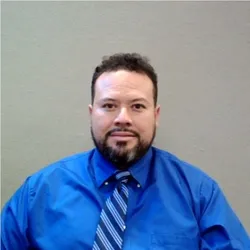
During the 2026 Lab Manager Safety Digital Summit session From Enforcer to Partner: Rethinking EHS in the Research Lab, Marvin Flores, program administrator for the School of Health at UC Davis Health in Sacramento, CA, explained how shifting that perception can strengthen laboratory safety culture while improving regulatory readiness. He described how environmental health and safety programs can evolve from a policing model into a collaborative partnership that supports researchers, strengthens compliance outcomes, and builds long-term trust.
Building laboratory safety culture beyond compliance
Flores emphasized that laboratory safety culture involves more than simply following regulations. While compliance is often treated as the primary goal, he noted that it should instead be viewed as a baseline outcome of a stronger culture. “Some folks think about safety culture as just compliance to regulations,” Flores said, adding that compliance is “the minimum thing that you should be looking for.”

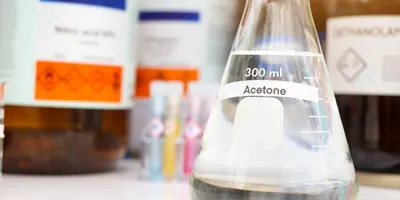
At UC Davis Health, environmental health and safety teams support a research environment comprising approximately 110 principal investigators across a wide range of biomedical and health sciences programs. These laboratories must comply with multiple regulatory authorities, including Cal OSHA, the California Department of Public Health, institutional oversight committees, and fire marshal inspections. Managing these overlapping requirements creates operational pressure for both laboratory managers and safety professionals, reinforcing the need to shift from enforcement toward engagement and education.
Using training and communication to prepare labs
To support a stronger laboratory safety culture, Flores implemented training initiatives designed to improve researchers’ understanding of safety requirements and regulatory expectations. One key initiative was a one-hour mandatory training session focused on hazardous waste management, inspection preparation, and laboratory best practices. The session also introduced researchers to the environmental health and safety team and clarified institutional safety standards, helping to establish both expectations and relationships early.
“We taught them how to prepare for an inspector,” Flores said.
In addition to classroom training, safety professionals conducted walkthroughs in laboratory spaces to demonstrate safe practices and identify potential inspection findings before regulators arrived. These walkthroughs provided an opportunity to explain not only what was required but also why specific practices mattered for both researcher safety and regulatory compliance. When external inspections resumed, the preparation efforts resulted in significantly fewer findings, and many issues were resolved immediately during inspections.
Transforming laboratory safety inspections into conversations
A central shift in Flores’s approach involved rethinking how laboratory safety inspections were conducted. Traditional inspection models often rely on short visits and checklist reviews followed by written corrective actions. While efficient, this approach can reinforce the perception that safety staff function primarily as compliance auditors rather than partners.
Instead, Flores expanded the time spent during inspections so they could function as collaborative conversations. “I ask questions,” he said. “I ask about their lab hazards—have their lab hazards changed?”
These discussions help researchers identify evolving risks, such as new experimental methods or materials that may not yet be reflected in safety documentation. Flores also reframes inspections as preparation for external regulatory reviews rather than punitive evaluations. “I tell them this is a friendly inspection,” he said. “I work for UC Davis Health, so do you—we’re on the same team.”

Lab Management Certificate
The Lab Management certificate is more than training—it’s a professional advantage.
Gain critical skills and IACET-approved CEUs that make a measurable difference.
To support this approach, laboratories receive advance notice of common findings and the inspection checklist, enabling them to address issues proactively. “It’s not a secret what I’m doing,” Flores said. “They know what I’m looking for.” By making laboratory safety inspections more transparent and collaborative, environmental health and safety teams can help laboratories resolve issues earlier and reduce repeat findings.
Building trust between researchers and safety teams
Flores emphasized that strengthening laboratory safety culture requires sustained relationship-building between environmental health and safety professionals and laboratory staff. Spending additional time in laboratories allows safety teams to better understand the research environment, evolving hazards, and operational challenges researchers face.
These interactions also create opportunities to assist with institutional systems, documentation requirements, and safety planning. Over time, this consistent engagement helps shift perceptions of safety professionals from enforcement authorities to operational partners. As trust builds, researchers become more willing to report safety concerns, ask questions, and actively engage with safety programs.
Interested in lab health and safety?
Engaging early-career researchers in safety practices
Flores also developed a quarterly four-hour orientation program for new laboratory personnel to reinforce safety expectations from the outset. The program introduces laboratory safety concepts, regulatory responsibilities, and real-world examples of laboratory incidents, using case studies and discussion to encourage reflection.
As part of the training, Flores asks participants whether they feel comfortable raising safety concerns and whether they would report unsafe practices. “No one’s going to care about you more than you’re going to care about yourself,” he said.
By introducing laboratory safety culture early in researchers’ careers, environmental health and safety programs can encourage safer behaviors and stronger engagement with safety practices over time.
A partnership model for environmental health and safety
Flores concluded that transforming environmental health and safety in research labs requires consistent communication, transparency, and collaboration. When laboratory safety inspections are used as opportunities for discussion and education rather than enforcement, safety programs often see stronger engagement and fewer repeat compliance issues.
“Compliance or regulations is not the goal,” Flores said. “It’s the outcome of a positive safety culture.”
For laboratory managers and safety professionals, the session demonstrates how environmental health and safety teams can support research productivity while strengthening laboratory safety culture through partnership rather than enforcement.
This article was created with the assistance of Generative AI and has undergone editorial review before publishing.