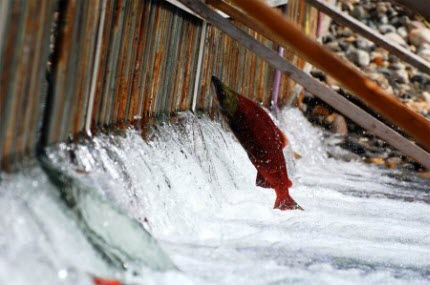
 Salmon exposed to the highest concentration of diluted bitumen suffered a 10 per cent reduction in swimming performance.Photo courtesy of the University of GuelphPipelines carrying crude oil to ports in British Columbia may spell bad news for salmon, according to a new University of Guelph-led study.
Exposure to an oil sands product—diluted bitumen—impairs the swimming ability and changes the heart structures of young salmon.
The research will be published in the journal Environmental Toxicology and Chemistry, and is available online now.
It’s a timely finding, says U of G post-doctoral researcher and lead author Sarah Alderman.
Related Article: Contaminated Environmental Samples: New Methods to Extract and Analyze
The National Energy Board (NEB) recently approved the controversial Trans Mountain pipeline expansion project; the federal government is expected to make a final decision by December.
 Sarah AldermanPhoto courtesy of the University of GuelphThe pipeline stretches from Edmonton to Burnaby B.C. The expansion would double the volume of oil sands products reaching the Pacific coast. It’s just one of several trans-Canada pipelines on the NEB’s review list.
“The Trans Mountain pipeline already carries diluted bitumen through the Fraser River Watershed and this is prime salmon habitat,” Alderman said.
Working with colleagues at Simon Fraser University and the University of British Columbia, Alderman exposed fish to small amounts of diluted bitumen for up to four weeks.
She found that salmon exposed to the highest concentration of diluted bitumen suffered a ten percent reduction in swimming performance.
“This may not seem like much, but to a young salmon about to head out to the ocean, it’s huge,” Alderman said.
“These fish are swimming all-out for hours each day, traveling up to 1,000 kilometres to reach the Pacific, and they need a strong heart to do this.”
 Prof. Todd GillisPhoto courtesy of the University of GuelphExposure conditions used in the study are in line with a pipeline failure scenario, Alderman said. She added that month-long exposures are conceivable, given the landscape challenges of the Pacific coast.
Bitumen extracted from the Canadian oil sands is transported by pipeline for processing into petroleum products.
The researchers found it has an effect even when the exposure range was in the parts per billion—close to what is allowed in drinking water.
“This is a drop in the bucket and a fraction of the contaminant level measured in the Gulf of Mexico following the BP oil spill in 2010,” Alderman said.
At U of G, she is working with integrative biology professor Todd Gillis, principal investigator of a $430,000 Fisheries and Oceans Canada project on bitumen exposure.
The more diluted bitumen fish encounter, and the longer they are exposed to it, the greater the impact on their health and fitness, Alderman said.
Related Article: Pollutants in Fish Inhibit Human’s Natural Defense System
“What our study really says is before you build any more pipelines through salmon habitat, you need to make sure that you’re building pipelines to the highest possible standard, that you can quickly detect any leaks in the system, and that you have rapid and thorough spill response procedures.”












