News

In social amoebae, genes for cooperation and for cheating have reached a stalemate.

Robot science does more than just crunch numbers.

Brain generalizes millions of colors to 'best' versions of basic colors, research suggests.

New research at the University of Arkansas suggests that methanogens – among the simplest and oldest organisms on Earth – could survive on Mars.

The Large Hadron Collider (LHC) started delivering physics data on June 3 for the first time in 27 months.

Biofuels pioneer Mascoma LLC and the Department of Energy's BioEnergy Science Center have developed a revolutionary strain of yeast that could help significantly accelerate the development of biofuels from nonfood plant matter.

About 3 percent of smalltooth sawfish from Florida estuary are products of “virgin birth.”

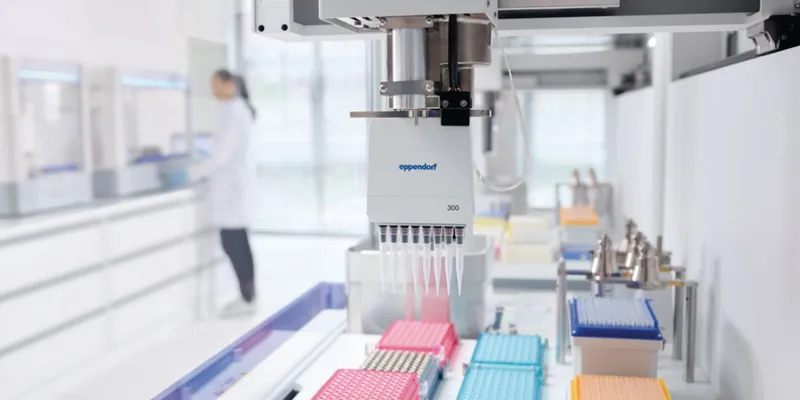
There’s an urgent demand for new antimicrobial compounds that are effective against constantly emerging drug-resistant bacteria. Two robotic chemical-synthesizing machines, named Symphony X and Overture, have joined the search. Their specialty is creating custom nanoscale structures that mimic nature’s proven designs. They’re also fast, able to assemble dozens of compounds at a time.

A University of Wisconsin-Madison animal scientist has developed an antibiotic-free method to protect animals raised for food against common infections.

This year, in a new partnership with the School of the Art Institute of Chicago, the Arts, Science & Culture Initiative awarded grants to five teams composed of nine UChicago and three SAIC graduate students.

Results suggest that brainwaves could be used by security systems to verify a person's identity

Newly discovered nerve cells trigger locomotion and deliver information on movement velocity to the spatial memory systems