News

Competition for agricultural land and other climate mitigation factors could lead to more people going hungry.

Treatment worked better than cancer drugs alone in mice.

Results suggest that schools should foster a 'growth mindset' of mathematical ability to encourage more girls to opt for majors in the physical sciences, engineering, mathematics, or computer science.

For University of Wisconsin-Madison plastics engineer Tim Osswald, the Wisconsin Idea is about taking the extra step: taking research out of the lab.

Computer simulations exploring the effects of shock waves on crystalline HMX, performed by Ryan Austin, a staff scientist in Engineering’s Computational Engineering Division, and a team of Lawrence Livermore National Laboratory researchers, are featured on the cover of the May 14 issue of the Journal of Applied Physics.

The latest equipment, instrument and system introductions to the laboratory market.

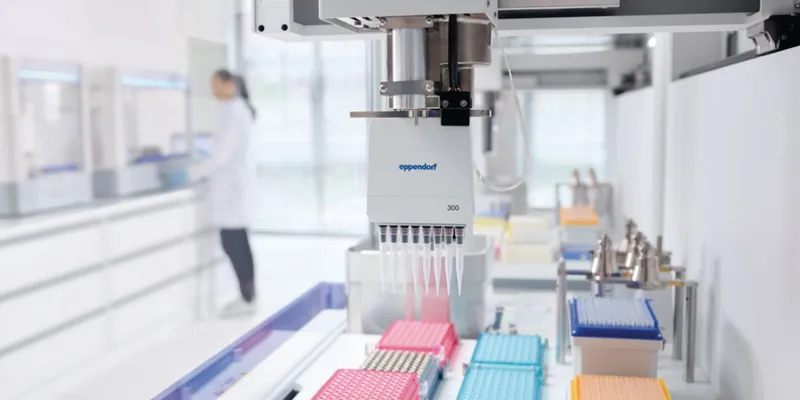
First-of-its-kind system looks to increase speed and efficiency while reducing human error in analysis workflows

University of Florida researchers have found a light trap that monitors mosquitoes more effectively, while ferreting out bugs no one wants or needs to kill.

Kristi Gaines and Su Shin found a gap in research related to clothing designed specifically to help children with autism cope with their environments.

Planets with volcanic activity are considered better candidates for life than worlds without such heated internal goings-on.

A space-based system that relies on lasers to generate and deliver energy to spacecraft has won a University of Alabama in Huntsville (UAH) professor a U.S. patent and could become a first-line defense against asteroids on a collision course with Earth.

Key sign of quark-gluon plasma (QGP) and evidence for a long-debated quantum phenomenon.