News

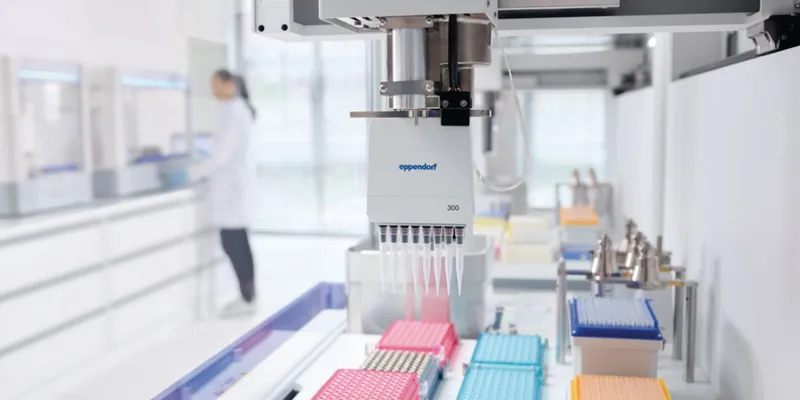
The microtubes are just 8 millimeters long and less than a hundredth of an inch wide.

X-ray laser measures atomic-scale details of how ring-shaped gas molecule breaks open, unravels.

Finding suggests novel mechanism for treating epilepsy.

Carlos Alvarez, founder and owner of The Gambrinus Company of San Antonio, Texas, announced a $1 million gift to the brewing science program at UC Davis.

A newly-designed material, which mimics the wing structure of owls, could help make wind turbines, computer fans and even planes much quieter. Early wind tunnel tests of the coating have shown a substantial reduction in noise without any noticeable effect on aerodynamics.

UNC School of Medicine researchers provide first direct experimental evidence for the rapid synthesis of two classes of proteins necessary to create the first life on Earth.

A quantum mechanical transport phenomenon demonstrated for the first time in synthetic, atomically-thin layered material at room temperature could lead to novel nanoelectronic circuits and devices, according to researchers at Penn State and three other U.S. and international universities.

“Just mentioning bees and pesticides in the same sentence is sure to get a buzz,” said Angus Catchot, an entomologist with the Mississippi State University Extension Service.

Higher consumption of dietary trans fatty acids (dTFA), commonly used in processed foods to improve taste, texture and durability, has been linked to worsened memory function in men 45 years old and younger, according to a University of California, San Diego School of Medicine study published online on June 17 in PLOS ONE.

Dreaded bacterial-related diseases have killed untold numbers of humans over the centuries. Today, two million illnesses and nearly 23,000 deaths can be attributed to antibiotic-resistant bacteria throughout the United States, say the Centers for Disease Control and Prevention.

Acknowledging not only the growing need among scientists and engineers for resources that can help them handle, explore, and analyze big data, but also the complementary strengths of Caltech's Center for Data-Driven Discovery (CD3) and JPL's Center for Data Science and Technology (CDST), the two centers have formally joined forces, creating the Joint Initiative on Data Science and Technology.

Catalysts created by Carnegie Mellon University chemist Terrence J. Collins effectively and safely remove a potent and dangerous endocrine disruptor from wastewater.