Largest study of its kind
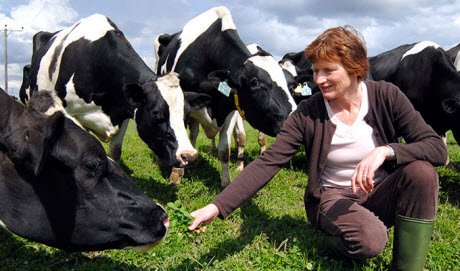 Gillian Butler, senior lecturer in animal nutrition at Newcastle University.Photo courtesy of Newcastle UniversityAnalyzing data from around the world, the team led by Newcastle University, reviewed 196 papers on milk and 67 papers on meat and found clear differences between organic and conventional milk and meat, especially in terms of fatty acid composition, and the concentrations of certain essential minerals and antioxidants.
Publishing their findings Feb. 16 in the British Journal of Nutrition, the team say the data show a switch to organic meat and milk would go some way towards increasing our intake of nutritionally important fatty acids.
Related Article: INSIGHTS on Food Safety
Chris Seal, Professor of Food and Human Nutrition at Newcastle University explains: “Omega-3s are linked to reductions in cardiovascular disease, improved neurological development and function, and better immune function.
“Western European diets are recognized as being too low in these fatty acids and the European Food Safety Authority (EFSA) recommends we should double our intake.
“But getting enough in our diet is difficult. Our study suggests that switching to organic would go some way towards improving intakes of these important nutrients.”
Western European diets are too low in omega-3 fatty acids
The systematic literature reviews analysed data from around the world and found that organic milk and meat have more desirable fat profiles than conventional milk and meat.
Most importantly, a switch from conventional to organic would raise omega-3 fat intake without increasing calories and undesirable saturated fat. For example, half a litre of organic full fat milk (or equivalent fat intakes from other dairy products like butter and cheese) provides an estimated 16 percent (39 mg) of the recommended, daily intake of very long-chain omega-3, while conventional milk provides 11 percent (25 mg).
Other positive changes in fat profiles included lower levels of myristic and palmitic acid in organic meat and a lower omega-6/omega-3 ratio in organic milk. Higher levels of fat soluble vitamins such as vitamin E and carotenoids and 40 percent more CLA in organic milk were also observed.
The study showed that the more desirable fat profiles in organic milk were closely linked to outdoor grazing and low concentrate feeding in dairy diets, as prescribed by organic farming standards.
The two new systematic literature reviews also describe recently published results from several mother and child cohort studies linking organic milk, dairy product and vegetable consumption to a reduced risk of certain diseases. This included reduced risks of eczema in babies.
Newcastle University’s Professor Carlo Leifert, who led the studies, said: “People choose organic milk and meat for three main reasons: improved animal welfare, the positive impacts of organic farming on the environment, and the perceived health benefits. But much less is known about impacts on nutritional quality, hence the need for this study.
“Several of these differences stem from organic livestock production and are brought about by differences in production intensity, with outdoor-reared, grass-fed animals producing milk and meat that is consistently higher in desirable fatty acids such as the omega-3s, and lower in fatty acids that can promote heart disease and other chronic diseases.”
Avoiding iodine over- and under-supply from milk is a challenge
The study also found 74 percent more iodine in conventional milk which is important information, especially for UK consumers, where iodized table salt is not widely available.
Iodine is low in most foods, except seafood, and the World Health Organization (WHO) recommends Iodine fortification of table salt to address this. Iodine fortification of cattle feeds is also widely used to increase iodine concentrations in both organic and conventional milk.
Gillian Butler, co-author and senior lecturer in animal nutrition at Newcastle University, explains: “There is a relatively narrow margin between dietary Iodine deficiency ( 500 µg/day) from our diet which can lead to thyrotoxicoxis.
“Optimizing iodine intake is therefore challenging, since globally there seems to be as much concern about excessive rather than inadequate intake.”
In the USA, China, Brazil, and many European countries, where Iodine fortified salt is widely used, elevated levels of iodine in milk may increase the risk of excessive intake for individuals with high dairy consumption. For this reason the European Food Safety Authority (EFSA) has proposed a reduction in the permitted level of iodine in cattle feed from 5 to 2 mg iodine per kg of feed.
However, in the UK, where iodized salt is not widely available, the population relies more on milk and dairy products for adequate iodine supply. National Diet and Nutrition Survey data (NDNS) suggest that milk and dairy products supply between 31-52 percent of iodine in the UK diet.
The daily recommended intake of iodine in the UK is 140 µg/day and just over half comes from dietary sources other than milk/dairy products. Based on results from the study, half a litre of milk would provide 53 percent of and 88 percent of the daily recommended intake from organic and conventional milk respectively. However, pregnant and breastfeeding women have a higher iodine requirement (250 µg/day) and are therefore more at risk of iodine deficiency, which could affect neurological development in babies.
Further evidence of the health benefits of organic food
 Professor Carlo LeifertPhoto courtesy of Newcastle UniversityThe work builds on a previous study by the team–involving experts from the UK, US, France, Italy, Switzerland,and Poland–investigating the composition of organic and conventionally-grown crops.
This previous study–also published in the British Journal of Nutrition–showed that organic crops and crop-based foods are up to 60 percent higher in a number of key antioxidants than conventionally-grown crops and contained less of the toxic metal cadmium.
“We have shown without doubt there are composition differences between organic and conventional food. Taken together, the three studies on crops, meat and milk suggest that a switch to organic fruit, vegetables, meat and dairy products would provide significantly higher amounts of dietary antioxidants and omega-3 fatty acids,” concludes Professor Leifert.
“We need substantially more, well designed studies and surveys before we can accurately estimate composition differences in meat from different farm animals and for many nutritionally important compounds (vitamins, minerals, toxic metal and pesticide residues), as there is currently too little data to make comparisons.
“However, the fact that there are now several mother and child cohort studies linking organic food consumption to positive health impacts shows why it is important to further investigate the impact of the way we produce our food on human health.
The authors highlight that only a small number of studies have been carried out comparing organic and non-organic meat, and that even significant results may still carry a high level of uncertainty.
The authors of this study welcome the continued public and scientific debate on this important subject. The entire database generated and used for this analysis is freely available on the Newcastle University website, alongside the data from their previous study on organic versus conventional crops (http://research.ncl.ac.uk/nefg/QOF) for the benefit of other experts and interested members of the public.